Your cart is empty






Küche






3D ONLINE KÜCHENPLANER






Quiet, powerful, invisible: This is how you find the perfect range hood
A range hood is a crucial appliance for the indoor climate in the kitchen. Its primary task is to reduce grease, odors, and moisture from the air to protect furniture from deposits and create a pleasant ambiance. In modern, open-plan kitchens, the demands on performance, noise levels, and visual integration increase significantly. This guide provides a technical and critical overview of the key planning factors and technologies necessary for an informed purchasing decision.

1. Basic system decision: exhaust air or recirculation air
This is the first and most important decision, which depends on the structural conditions and has far-reaching consequences for efficiency, cost, and installation.

Exhaust air
How it works: The hood draws in cooking fumes (vapors). An integrated metal grease filter cleans the air of grease particles before the entire captured air volume is directed outside through a pipe system via a wall penetration.
Advantages: This is the most effective method of air purification. Not only grease and odors, but also all moisture in the form of water vapor is completely removed from the room. This most effectively prevents the formation of condensation and possible mold growth. Since the air has to overcome less resistance than in recirculation systems with multiple filters, exhaust hoods are often quieter at the same performance level. Additionally, there are no follow-up costs due to the regular replacement of odor filters.
Disadvantages and technical requirements: The installation is complex. It requires a wall penetration (core drilling) and a flow-optimized exhaust duct. Ideally, smooth-walled pipes with a large diameter (e.g., 150 mm) and wide bends are used to minimize flow resistance. In many rental apartments, wall penetrations are not allowed. In highly insulated low-energy houses (e.g., according to KfW standards), an exhaust system is problematic because heated heating air is blown outside in winter, resulting in significant energy loss. Additionally, sufficient fresh air supply must be ensured to avoid dangerous negative pressure in the room. When operating simultaneously with a room-air-dependent heating appliance (e.g., fireplace, gas boiler), a window contact switch or another certified supply air control is legally required to prevent toxic exhaust gases from being drawn back into the room.
Circulation
How it works: The hood draws in the fumes and cleans them in two stages. A grease filter removes grease particles. A downstream activated carbon filter adsorbs odor molecules. The purified air is then returned to the room.
Advantages: The installation is simple and does not require any structural changes to the building envelope. This is the standard solution for rental apartments and energy-efficient houses without controlled residential ventilation. There is no heat loss because the warmed indoor air remains inside the building.
Disadvantages: The decisive disadvantage is that moisture (water vapor) is not removed. Therefore, after cooking, the humidity must be reduced by window ventilation to avoid condensation. Additionally, follow-up costs and maintenance arise from the activated carbon filter, which depending on the model and usage must be replaced every 3 to 6 months or thermally regenerated in the oven.
2. Designs: From the classic extractor hood to the integrated extractor
The wall hood: Mounted on the wall above the cooktop. The most ergonomically sensible variant is the headroom hood with a slanted canopy, which frees the view of the pots and prevents bumping the head.
The island hood / The ceiling fan: For kitchen islands, the classic ceiling-hung island hood is suitable, which represents a strong design element. A more discreet alternative is the ceiling fan, which is flush-mounted into a suspended ceiling. For effective function, a ceiling fan requires high air performance and often uses so-called edge extraction to create a stable airflow. Planning must consider ceiling height and the load-bearing capacity of the ceiling structure.
The cooktop extractor (downdraft extractor): The most aesthetically inconspicuous solution, where the extractor is integrated directly into the cooktop. The fan sucks the steam down directly at the pot or pan edge.
Advantages: Maximum headroom and an unobstructed view.
Disadvantages: With very tall pots, capturing the rising steam can be physically limited. A significant disadvantage is the loss of storage space in the cabinet below, which is needed for the motor unit and air ducts. This often requires the use of shortened drawers.
3. Filter technology: The heart of the system
The grease filter: Present in every system, usually as a multi-layer, dishwasher-safe metal filter. A high grease separation rate (Class A or B on the EU energy label) is an important quality feature. A technological alternative to filtering is the Centrifugal separation. Here, the drawn-in air is set into a rapid rotation. The centrifugal force throws the heavier grease particles out of the air, where they are collected in a tray. These systems operate without a traditional filter, which promises consistently high performance since no filter can clog.
The odor filter (only for recirculation): There are significant differences here in efficiency, operating costs, and maintenance effort.
Standard activated carbon filter: These disposable filters bind odor molecules by adsorption on their microporous surface. They need to be replaced every 3 to 6 months, which causes ongoing costs and waste.

Regenerable activated carbon filters: These can be thermally regenerated several times in the oven ("burned off"), releasing the bound molecules again. They have a service life of about 2 to 3 years.
Plasma filter: A maintenance-free solution for recirculation systems. Instead of just binding odors, a plasma filter destroys organic molecules through electrical voltage (cold plasma). Advantages are very high efficiency (odor removal over 95%) and a long service life (over 10 years) without replacement. Disadvantages are the very high purchase costs and the potential, albeit low in certified devices, generation of ozone.
4. Important key figures: performance and noise level
Performance (airflow): The performance is given in cubic meters per hour (m³/h). Outdated rules of thumb for calculation (room volume x air exchange rate) are often inaccurate because they do not sufficiently consider modern, airtight building envelopes and open living concepts. A demand-oriented value depends heavily on individual cooking habits. A powerful intensive mode (booster) is useful for short-term high loads (e.g., searing).
Noise level (sound power): In open-plan kitchens, quiet operation is crucial. The noise level is given in decibels (dB(A)). The decibel scale is logarithmic, which means that a reduction of 3 dB is perceived as halving the perceived loudness. Values below 60 dB(A) at the medium normal level are considered quiet. Always compare values for the same power level, as often only the value for the lowest level is advertised. The EU energy label provides standardized and comparable values here.
5. Conclusion: Checklist for a well-considered decision
Choosing the right extractor hood is an important technical decision. The process should be systematic:
Clarify system question: Check the structural possibilities and energy consequences of exhaust air. If these are not given, recirculation is the logical choice. Consider the need for ventilation to reduce moisture with recirculation.
Choose design: Choose a shape that fits your kitchen planning and aesthetic requirements. Weigh the pros and cons of headroom, loss of storage space, and visual presence.
Evaluate technology: Compare the grease separation rates. If you choose recirculation, weigh the running costs of standard carbon filters against the higher initial investment for regenerable or maintenance-free systems.
Compare key figures: Pay attention to sufficient performance with the lowest possible decibel value. Use the EU energy label as an objective basis for comparison.
A good extractor hood is a system whose functionality and maintenance effort fit your lifestyle and structural situation and that convinces in everyday use through effective and quiet operation.
View full article

Gerätetechnische Erweiterungen im Nobilia-Portfolio 2026
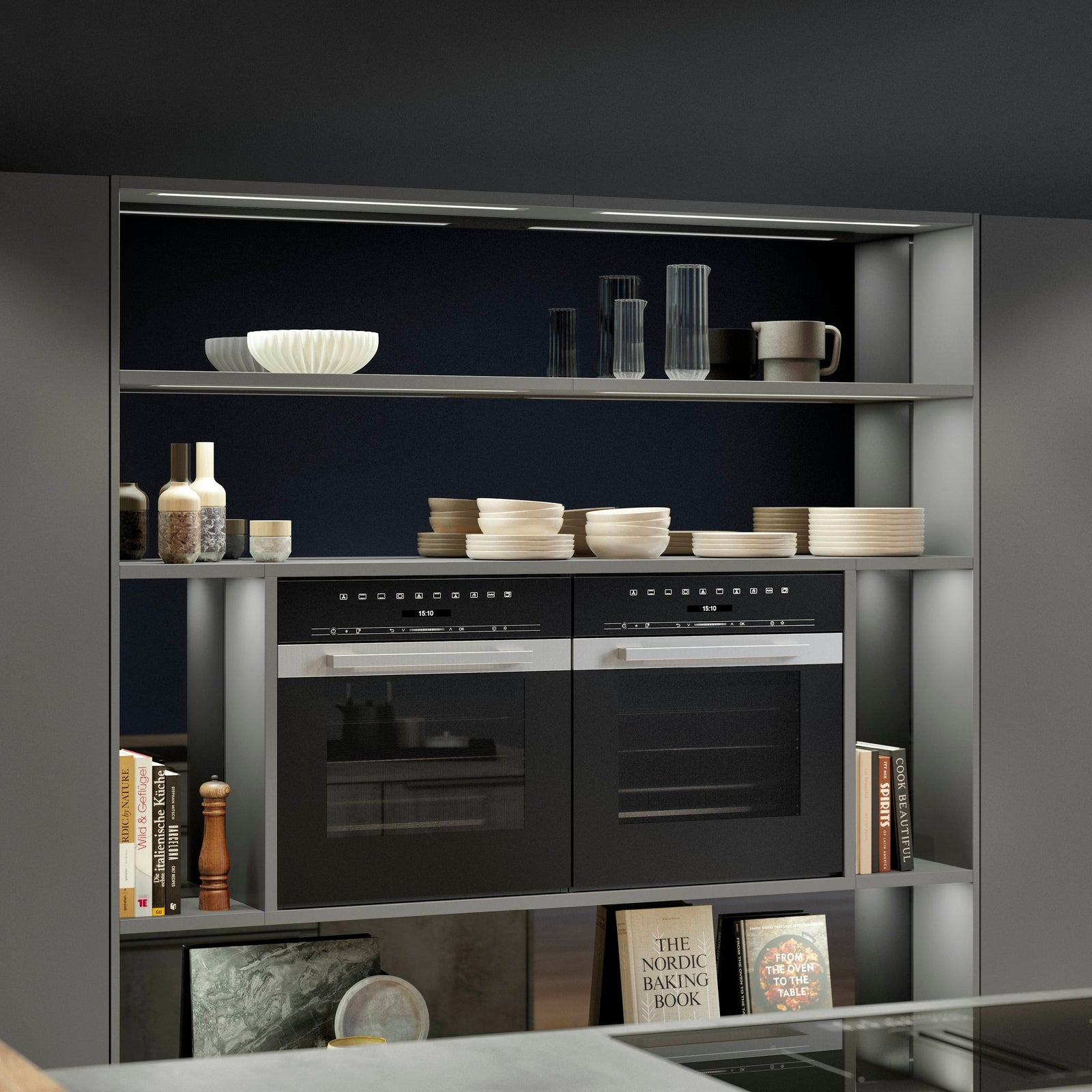
Moderne Küchen verlangen einfache Wartung und vielseitige Küchengeräte. Nobilia präsentiert 2026 mit dem BORA GPNext und exklusiven Electrolux-Neuheiten technische Erweiterungen für das mittlere Segment. Diese Innovationen beschleunigen den Filterwechsel und bieten Planern eine zentrale Lösung, ein Highlight unter den Küchentrends 2026.
View full article

Effektive Raumnutzung und Beleuchtungskonzepte in der modernen Küche
Viele Küchen leiden unter ungenutztem Stauraum und fehlender Beleuchtung in der Küche. Praxisorientierte Konzepte ermöglichen optimale Raumnutzung und funktionale, stimmungsvolle Küchenbeleuchtung. Tipps reichen von deckenhohen Schränken bis zu smarten Lichtkonzepten für perfektes Licht und maximale Funktion.
View full article

Farbtrends in der Küche: So schaffen Sie Ruhe und Natürlichkeit
Sterile Küchen wirken unpersönlich und kalt. Sanfte Erdtöne als Wandfarbe in der Küche schaffen eine warme, natürliche Atmosphäre. Küchentrends 2025 zeigen, wie Sie Ruhe und Geborgenheit erreichen.
View full article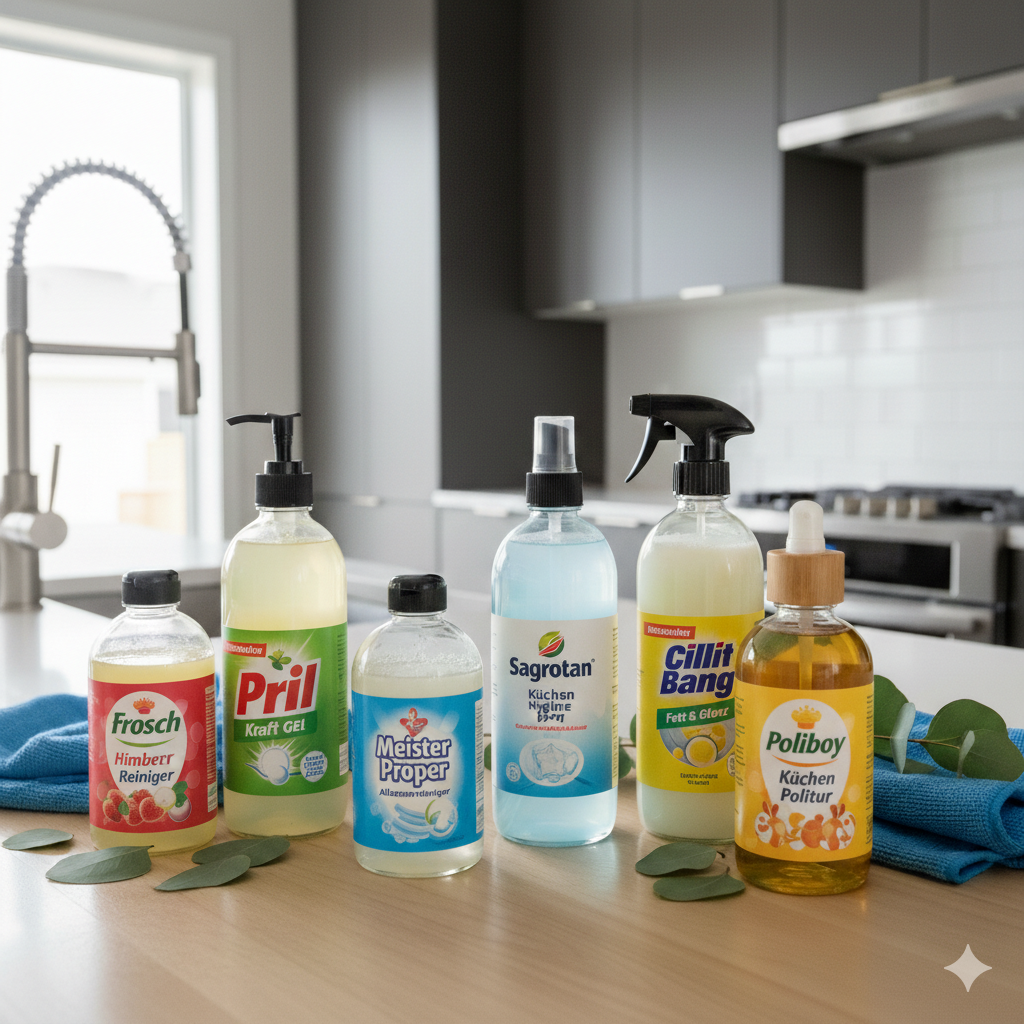

Welche Reinigungsmitteln benötigen wir in der Küche?
Fett- und Kalkablagerungen in der Küche erfordern spezielle Reinigungsmittel. Umweltfreundliche Putzmittel und Reiniger mit dem richtigen pH-Wert schützen Oberflächen. Praxisnahe Tipps zeigen die wichtigsten Arten von Reinigungsmitteln: säurebasierte, laugenbasierte und neutrale Lösungen.
View full article

Anti-Fingerprint-Oberflächen: Möglichkeiten und Grenzen
Anti-Fingerprint-Beschichtungen reduzieren sichtbare Gebrauchsspuren auf matten Küchenoberflächen. Als Küchen- und Möbelexperte stelle ich praxiserprobte Technologien und Pflegeroutinen vor. So bleibt Ihre Küche länger makellos und pflegeleicht.
View full article

Sieben Essentials für die Küchenpflege
Falsche Reiniger verursachen Kratzer, Verfärbungen und Flecken in der Küche. Praxisbewährte Tipps zur Küchenpflege schützen Oberflächen und verlängern die Lebensdauer Ihrer Küche. So wird das Reinigen der Küche zum schnellen und nachhaltigen Vorgang.
View full article Gerätetechnische Erweiterungen im Nobilia-Portfolio 2026
Moderne Küchen verlangen einfache Wartung und vielseitige Küchengeräte. Nobilia präsentiert 2026 mit dem BORA GPNext und exklusiven Electrolux-Neuheiten technische Erweiterungen für das mittlere Segment. Diese Innovationen beschleunigen den Filterwechsel und bieten Planern eine zentrale Lösung, ein Highlight unter den Küchentrends 2026.
View full article Effektive Raumnutzung und Beleuchtungskonzepte in der modernen Küche
Viele Küchen leiden unter ungenutztem Stauraum und fehlender Beleuchtung in der Küche. Praxisorientierte Konzepte ermöglichen optimale Raumnutzung und funktionale, stimmungsvolle Küchenbeleuchtung. Tipps reichen von deckenhohen Schränken bis zu smarten Lichtkonzepten für perfektes Licht und maximale Funktion.
View full article Farbtrends in der Küche: So schaffen Sie Ruhe und Natürlichkeit
Sterile Küchen wirken unpersönlich und kalt. Sanfte Erdtöne als Wandfarbe in der Küche schaffen eine warme, natürliche Atmosphäre. Küchentrends 2025 zeigen, wie Sie Ruhe und Geborgenheit erreichen.
View full article