Your cart is empty






Küche





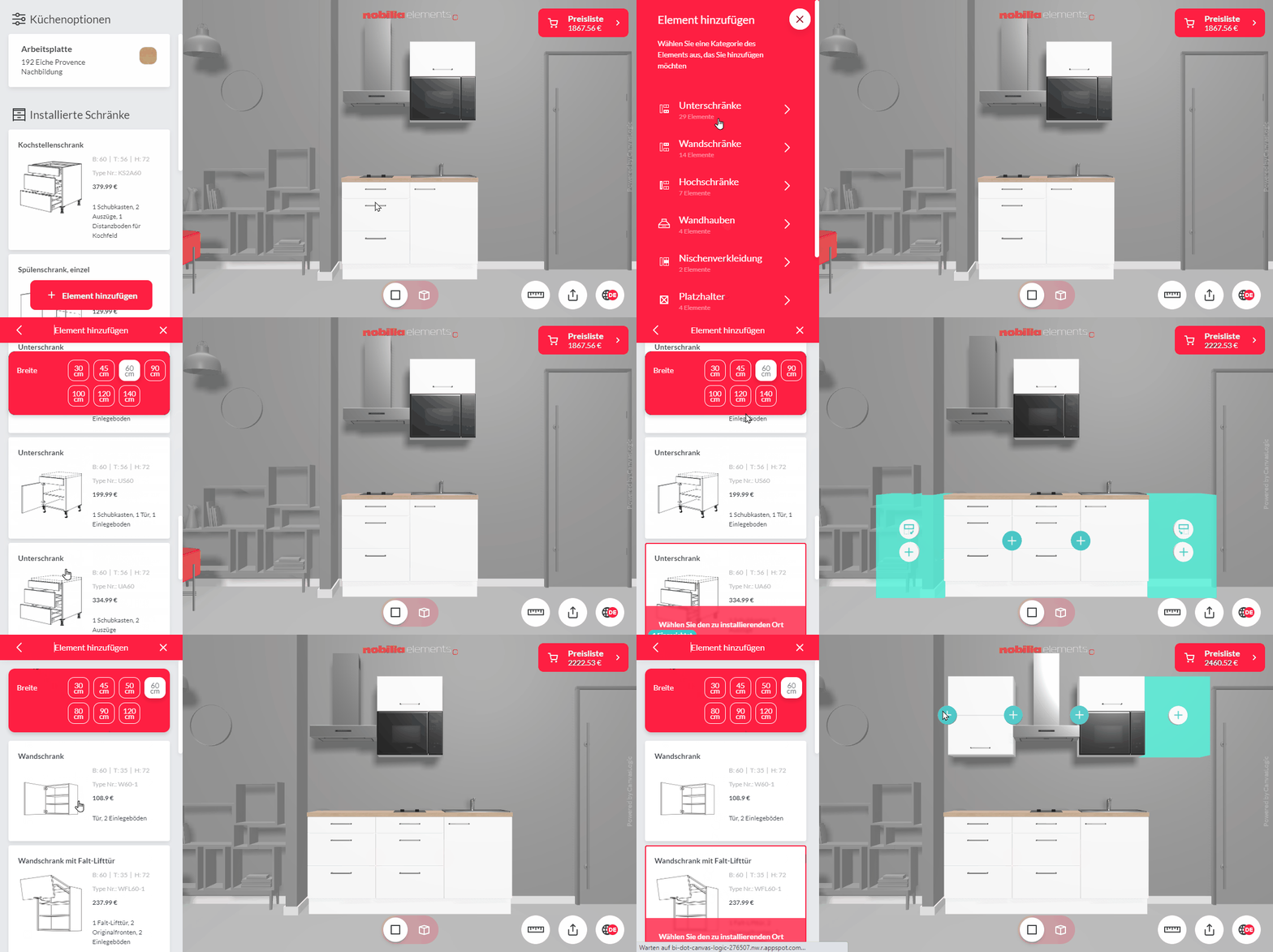
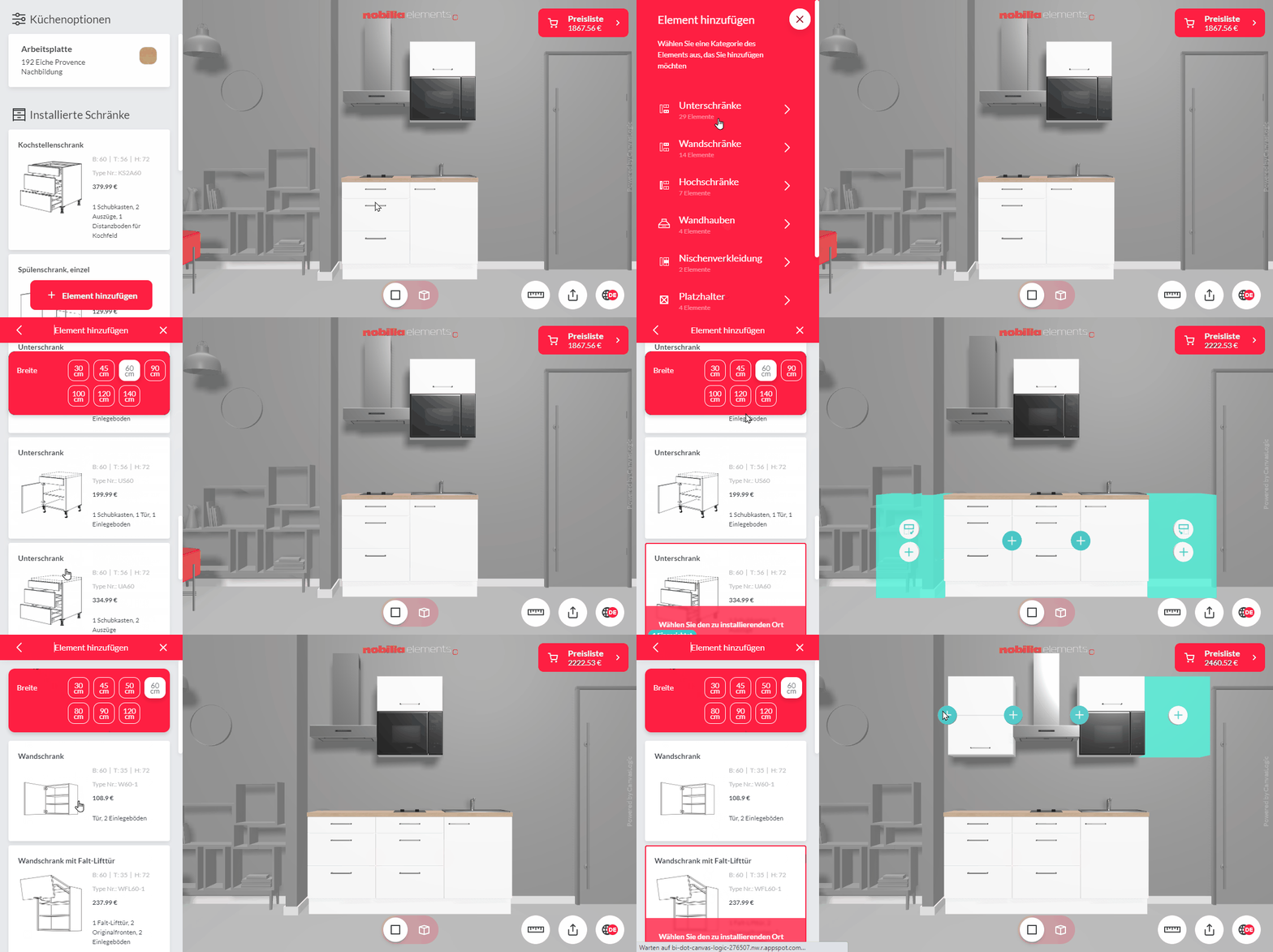
3D ONLINE KÜCHENPLANER






More than just handleless: What really defines a modern kitchen
The modern kitchen follows the design principle of reduction to the essentials. Its aesthetics arise from the clarity of form, the quality of materials, and the integration of function, not from decoration or ornamental details. This style is a response to the desire for a calm, structured, and tidy environment. This guide analyzes the fundamental principles of modern kitchen planning and highlights the practical advantages and disadvantages of typical design features to create a well-founded basis for decision-making.

1. Basic Features of the Modern Kitchen
Clear lines and purist design: The language of form is consistently linear and geometric. Symmetry and a precise, continuous joint pattern are decisive quality features. Horizontal and vertical lines are continued across cabinet boundaries to create a calm overall appearance. Everything that could disturb this visual calm is avoided or cleverly hidden. This includes, for example, sockets that are flush-mounted into the countertop or niche cladding, or appliances that disappear behind furniture fronts.
High-quality material mix: The homely impression is created by the deliberate use of different materials. Often, cool, technical surfaces are combined with warm, natural materials to create visual and tactile contrasts.
- Lacquer fronts: Offer the greatest color variety according to standardized systems such as RAL or NCS. The quality is shown in a multi-layer structure that ensures high color depth. Ultra-matte surfaces absorb light and appear very calm but tend to be more susceptible to fingerprints and grease marks. High-gloss surfaces reflect light strongly, create optical depth, but can also appear more restless and make micro-scratches more visible.
- Innovative materials: Nanotech materials (e.g., Fenix) offer an extremely matte, low-reflection surface with a velvety feel. They are based on acrylic resins and a special hardening process. Their outstanding feature is an anti-fingerprint function and the ability to repair superficial micro-scratches through thermal treatment (heat and friction).
- Wood: Serves as a warm, natural counterpoint. Usually, real wood veneer is used because it is more dimensionally stable than solid wood. Light woods like oak create a Scandinavian-like, light atmosphere, while dark woods like walnut form a very noble, valuable contrast to dark fronts.
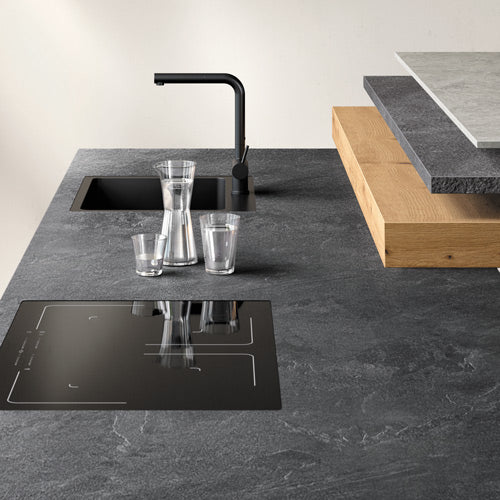
- Countertops: Thin panel thicknesses of 12 to 16 mm emphasize the modern, delicate look. Materials such as ceramic, compact laminate, or stainless steel enable this low thickness while maintaining high stability.
Muted and monochrome color palette: The basis consists of neutral and muted colors. White, various shades of gray and anthracite, as well as black, dominate and create a calm backdrop that lets the materials and forms speak for themselves. Strong colors are rarely used and only as targeted accents, for example, for a single tall cabinet wall.

Integrated lighting concept: Light is a central design element. A multi-layered concept is crucial.
- Task lighting: Bright, functional lighting, usually by LED strips under the upper cabinets. Here, a neutral light color (approx. 4000 Kelvin) and a high color rendering index (CRI > 90) are important to correctly assess the colors of food.
- Ambient lighting: Atmospheric lighting with a warm light color (approx. 2700 to 3000 Kelvin), e.g., in display cabinets, in the plinth area, or as indirect lighting to create a homely atmosphere.
2. The Handleless Front: Systems and Their Everyday Suitability
Omitting handles makes the fronts appear flat and calm, which is especially advantageous in open living concepts. However, the various opening systems have specific advantages, disadvantages, and costs.

The handle rail (recessed rail): A metal rail (usually aluminum) recessed horizontally or vertically into the cabinet carcass creates a gap into which you grip to open the front. There are different profile shapes (e.g., L or C profiles) that differ in grip depth.
- Advantages: Intuitive, direct opening. The fronts themselves remain free of fingerprints. The rail itself can be designed as a design element in stainless steel look, black, or white.
-
Disadvantages: The rail can collect dust and crumbs and requires regular cleaning.
Mechanical opening support (Push to Open): A light tap on the front triggers a spring mechanism that opens the door or drawer slightly.
- Advantages: Allows a completely closed front view without joints, representing the most purist aesthetic.
-
Disadvantages: Each touch leaves fingerprints directly on the front; an anti-fingerprint coating is strongly recommended here. Accidental opening by leaning is possible. Opening is a two-step process (press, then pull), and closing requires a second, active press.
Electric opening support: A short tap is enough, and an electric motor opens the drawer.
- Advantages: Highest operating comfort. Especially useful for heavy, fully loaded drawers, for waste pull-outs (when hands are not free), or for handleless refrigerators whose doors often have high resistance due to the seal.
- Disadvantages: Significantly more expensive than other systems, requires power connections for each cabinet, and increases the technical complexity of the furniture. The long-term reliability of the electronics and repair costs must also be considered.
3. The Open Space: Planning Requirements
The modern kitchen is often designed as an open living kitchen, which places special demands on planning.
Noise and odors: Cooking fumes and loud kitchen appliances can spread into the living area.
-
Solution: An investment in quiet electrical appliances is necessary, especially for dishwashers (under 44 dB, ideally under 42 dB) and refrigerators (with quiet inverter compressors). A powerful extractor hood is essential. A cooktop with integrated extractor (downdraft extractor) is a discreet option. However, its disadvantages are the loss of storage space in the base cabinet, higher costs, and potentially lower efficiency in capturing steam from tall pots.
Order and storage space: Since the kitchen is always visible, it must be tidy.
-
Solution: Sufficient closed storage space should be planned. Tall cabinets that use the entire wall height and pantry cabinets with internal drawers are ideal for keeping order. Tall cabinets with pocket doors, behind which entire work areas can be hidden, are a functional but very costly solution.
Design unity: Kitchen and living area must appear as a unit.
- Solution: A continuous floor covering connects the areas most effectively. The reuse of materials (e.g., the wood of the dining table in the kitchen shelves) or colors from the living area in the kitchen (or vice versa) creates a harmonious overall concept.
-
Solution: Sufficient closed storage space should be planned. Tall cabinets that use the entire wall height and pantry cabinets with internal drawers are ideal for keeping order. Tall cabinets with pocket doors, behind which entire work areas can be hidden, are a functional but very costly solution.
-
Solution: An investment in quiet electrical appliances is necessary, especially for dishwashers (under 44 dB, ideally under 42 dB) and refrigerators (with quiet inverter compressors). A powerful extractor hood is essential. A cooktop with integrated extractor (downdraft extractor) is a discreet option. However, its disadvantages are the loss of storage space in the base cabinet, higher costs, and potentially lower efficiency in capturing steam from tall pots.
4. Case Study: The Black Kitchen and Its Practical Aspects
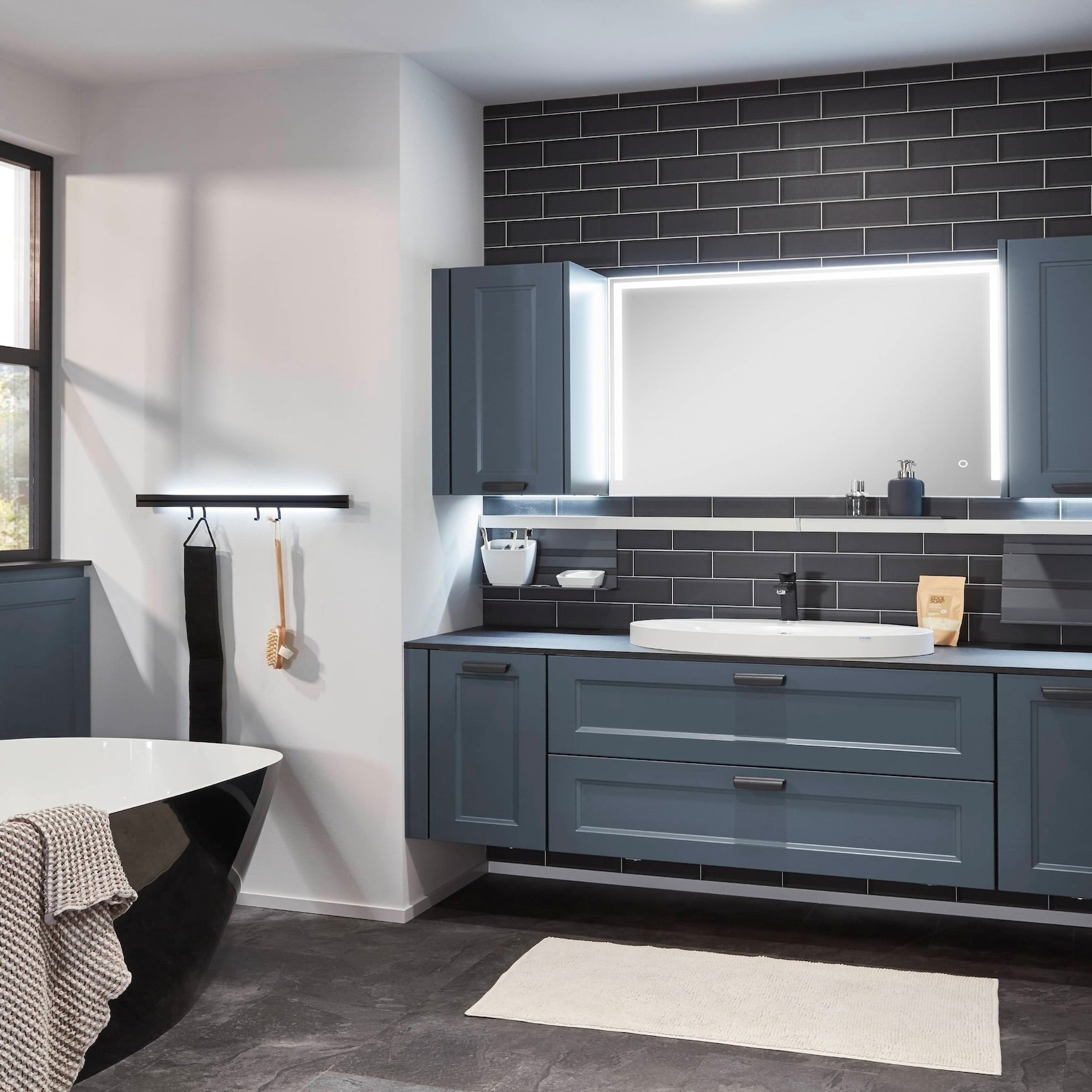
The black kitchen is a consistent implementation of the modern style. To prevent it from appearing gloomy and to function in everyday life, four factors are decisive:
- Material and surface: Ultra-matte lacquer fronts with an anti-fingerprint coating are the best choice. They appear calm but are still not immune to traces from greasy or wet fingers and can be more scratch-sensitive than textured surfaces.
- Contrasts: Black often needs a counterpoint to avoid appearing oppressive. A countertop or open shelves made of light wood (e.g., oak) or a light ceramic countertop in marble look can break the severity.
- Bright environment: Bright walls in white or light gray and a light floor form a necessary contrast and prevent the black kitchen from visually shrinking or oppressing the room. In rooms with little daylight, a completely black kitchen is not recommended.
- Lighting concept: Since black absorbs a lot of light, a well-thought-out, multi-level lighting with bright basic and task lighting as well as atmospheric accent lights is absolutely essential. Targeted spots that illuminate surfaces and indirect light sources are more important than in bright kitchens.
5. Conclusion and Guiding Questions for Planning
The modern kitchen is the result of a design approach that emphasizes clarity, function, and material quality. The decision for this style should be a conscious weighing of aesthetics and practical everyday suitability.
The following questions can help with planning:
- Functionality vs. aesthetics: How important is an absolutely purist, jointless appearance to me compared to practical handling (e.g., fingerprints, accidental opening)?
- Everyday suitability: Do I live so tidily that an open kitchen with potentially maintenance-intensive surfaces works for me in everyday life?
- Budget: Does my budget fit the often considerable additional costs for handleless systems, high-quality materials (real lacquer, ceramic), and integrated technology?
- Room situation: Is my room large and bright enough for a dark color concept, or are lighter tones the better choice to avoid shrinking the room?
View full article
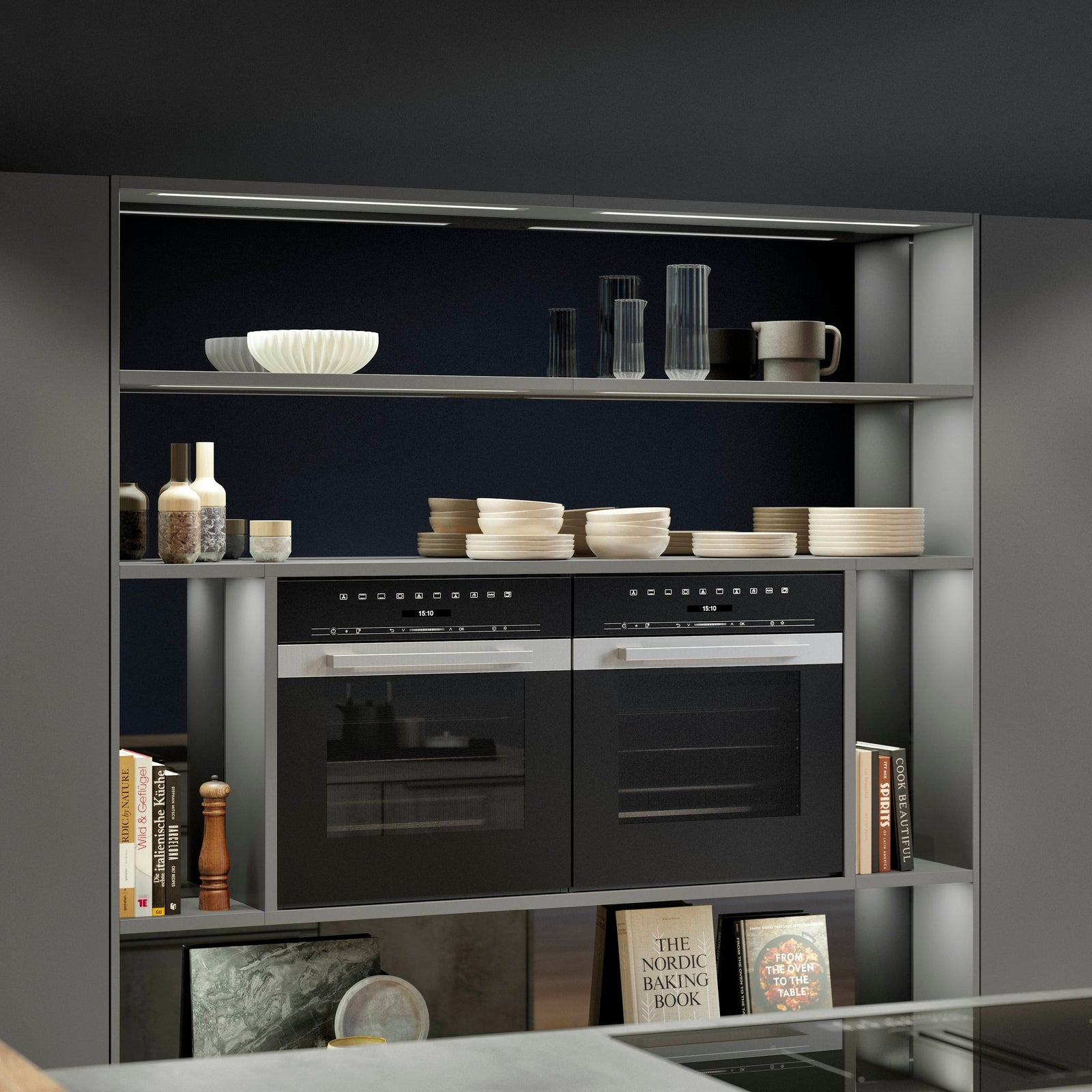

Gerätetechnische Erweiterungen im Nobilia-Portfolio 2026
Moderne Küchen verlangen einfache Wartung und vielseitige Küchengeräte. Nobilia präsentiert 2026 mit dem BORA GPNext und exklusiven Electrolux-Neuheiten technische Erweiterungen für das mittlere Segment. Diese Innovationen beschleunigen den Filterwechsel und bieten Planern eine zentrale Lösung, ein Highlight unter den Küchentrends 2026.
View full article

Effektive Raumnutzung und Beleuchtungskonzepte in der modernen Küche
Viele Küchen leiden unter ungenutztem Stauraum und fehlender Beleuchtung in der Küche. Praxisorientierte Konzepte ermöglichen optimale Raumnutzung und funktionale, stimmungsvolle Küchenbeleuchtung. Tipps reichen von deckenhohen Schränken bis zu smarten Lichtkonzepten für perfektes Licht und maximale Funktion.
View full article

Farbtrends in der Küche: So schaffen Sie Ruhe und Natürlichkeit
Sterile Küchen wirken unpersönlich und kalt. Sanfte Erdtöne als Wandfarbe in der Küche schaffen eine warme, natürliche Atmosphäre. Küchentrends 2025 zeigen, wie Sie Ruhe und Geborgenheit erreichen.
View full article

Natursteinoberflächen reinigen und pflegen
Wussten Sie, dass unsachgemäße Pflege die Lebensdauer Ihrer Küchenarbeitsplatte aus Naturstein um bis zu 50 % verkürzen kann? Mit jahrelanger Erfahrung in Küchenmöbeln und Natursteinflächen liefere ich klare Tipps zur Reinigung, Imprägnierung und Fleckenschutz. So bleibt Ihre Arbeitsplatte makellos und langlebig.
View full article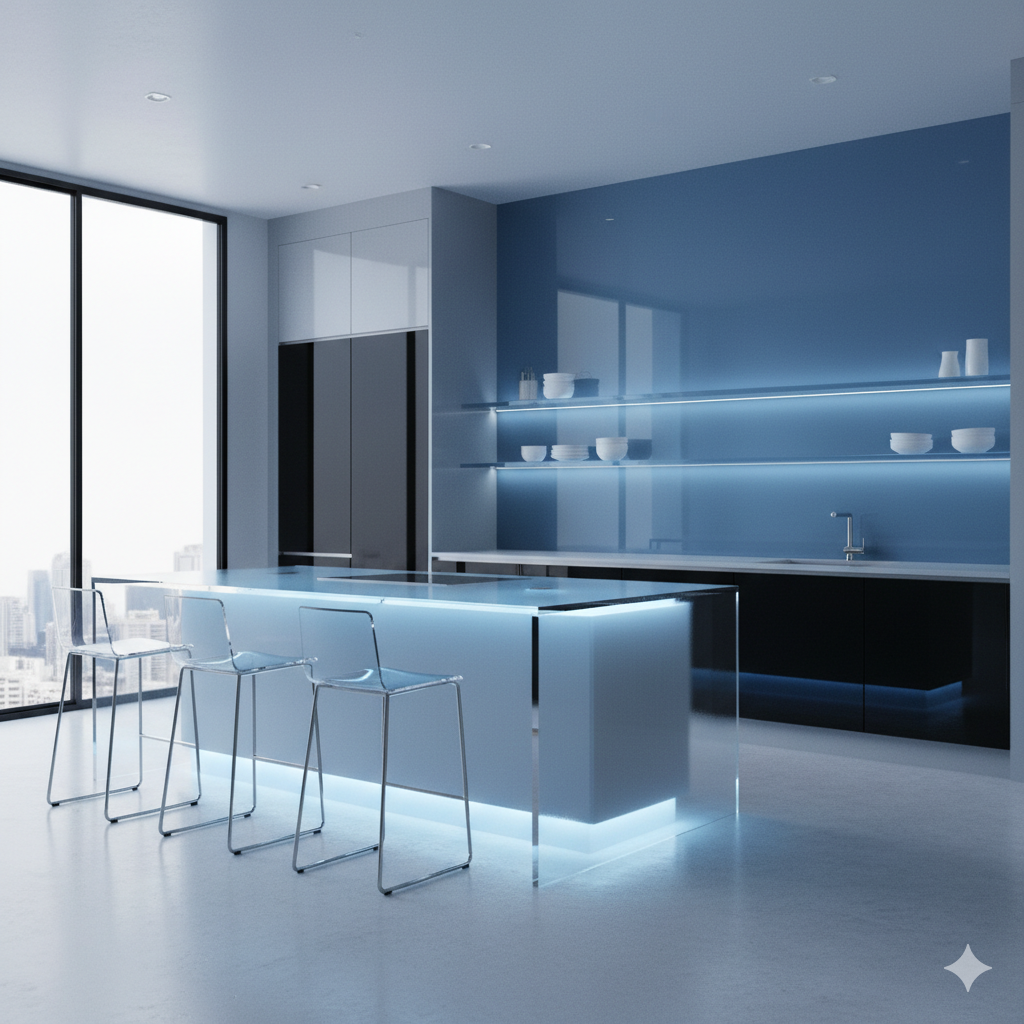

Polymerglas in Küche und Wohnraum
Falsche Reinigung kann Polymerglas in Ihrer Küche dauerhaft schädigen. Optimierte Pflegehinweise für Smartglas verhindern Trübungen und Spannungsrisse. Praxisnahe Tipps sorgen für schonende Reinigung und langfristige Werterhaltung Ihrer Küchenfronten.
View full article

Reinigung und Pflege von Kühlschrank und Geschirrspüler
Kühlschrank und Geschirrspüler leiden unter verstopften Kondenswasserabläufen und verschmutzten Dichtungen. Als Profi für Küchengerätewartung zeige ich praxisnahe Tipps für kühlschrank richtig reinigen, Geschirrspülerpflege und effektive Filterkontrolle. So vermeiden Sie Schimmel, senken den Energieverbrauch und verlängern die Lebensdauer Ihrer Geräte.
View full article Gerätetechnische Erweiterungen im Nobilia-Portfolio 2026
Moderne Küchen verlangen einfache Wartung und vielseitige Küchengeräte. Nobilia präsentiert 2026 mit dem BORA GPNext und exklusiven Electrolux-Neuheiten technische Erweiterungen für das mittlere Segment. Diese Innovationen beschleunigen den Filterwechsel und bieten Planern eine zentrale Lösung, ein Highlight unter den Küchentrends 2026.
View full article Effektive Raumnutzung und Beleuchtungskonzepte in der modernen Küche
Viele Küchen leiden unter ungenutztem Stauraum und fehlender Beleuchtung in der Küche. Praxisorientierte Konzepte ermöglichen optimale Raumnutzung und funktionale, stimmungsvolle Küchenbeleuchtung. Tipps reichen von deckenhohen Schränken bis zu smarten Lichtkonzepten für perfektes Licht und maximale Funktion.
View full article Farbtrends in der Küche: So schaffen Sie Ruhe und Natürlichkeit
Sterile Küchen wirken unpersönlich und kalt. Sanfte Erdtöne als Wandfarbe in der Küche schaffen eine warme, natürliche Atmosphäre. Küchentrends 2025 zeigen, wie Sie Ruhe und Geborgenheit erreichen.
View full article