Your cart is empty






Küche





3D ONLINE KÜCHENPLANER






Holistic living concepts: When kitchen furniture shapes the living room
In modern, open floor plans, the boundaries between cooking, dining, and living blur. This architectural change places new demands on interior design planning. To create a harmonious and stylistically unified atmosphere, many kitchen manufacturers today offer modular furniture systems that go beyond the kitchen area alone. This approach, using the kitchen as a design starting point for adjacent living areas, is a key trend in modern interior design. This article analyzes this concept, highlights the technical basics, the advantages and disadvantages, and presents alternatives.

1. The Concept: Design Continuity from Cooking to the Living Room
The basic idea is to use the materiality, colors, and precise grid dimensions of kitchen planning as a basis for designing adjacent areas. The kitchen has evolved from a purely functional workspace to a representative and often central element of the living area. It often represents the largest single investment in the furnishings. Therefore, it is a logical step to transfer the high quality standards and the consistent design language of the kitchen furniture to the adjacent living and dining areas. Instead of trying to find a visually matching sideboard for the new kitchen, the sideboard is made from exactly the same components and materials as the kitchen cabinets. The goal is to create a calm, coherent, and architecturally integrated overall picture.
2. The Building Blocks of the Concept and Their Technical Features
Kitchen manufacturers have expanded their ranges to include living furniture based on the same modular system as the kitchen cabinets. The crucial difference from conventional living furniture often lies in the construction and quality of the components.
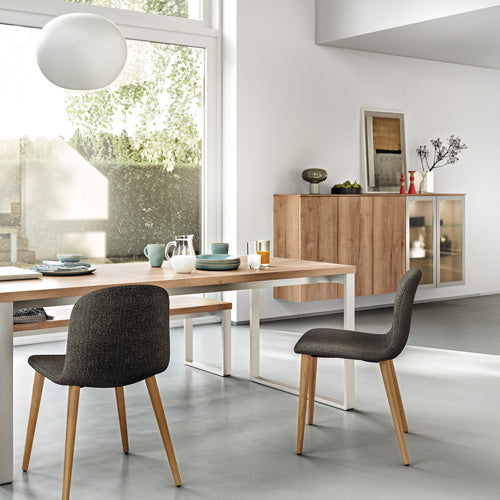
Sideboards, Lowboards & Highboards: These elements transfer the kitchen aesthetic directly into the living and dining areas. Their construction is based on the same quality features as the kitchen carcasses:
- Carcass material and thickness: Usually, 18 or 19 mm thick, highly compressed, and melamine resin-coated chipboards are used, ensuring high stability.
- Fittings: The hinges and pull-out systems used are designed for high loads and very frequent use, as is typical in everyday kitchen use. This often results in greater durability compared to standard fittings in living furniture.
-
Shelving systems and display cabinets: To prevent a continuously designed wall from appearing too massive, open and transparent elements are used. Delicate shelving systems with supporting frames made of powder-coated steel or aluminum can also function as airy room dividers. Display cabinets with tinted glass doors and integrated LED lighting create a cozy atmosphere.
Comprehensive cabinet and wall solutions:
- Floor-to-ceiling cabinet walls: Offer maximum storage space and can create a very calm wall design through their continuous front division.
- Pocket doors: With these doors, which disappear sideways into a niche in the cabinet carcass through a complex mechanism when opened, a complete home office or pantry kitchen can be made invisible when not in use. However, this mechanism is technically complex and costly.
- Wall panels: Matching wall panels in the same material or decor as the fronts can connect walls and furniture into an architectural unit.

3. Practical Application Areas
These modular building blocks enable the design of the entire home in a unified language.
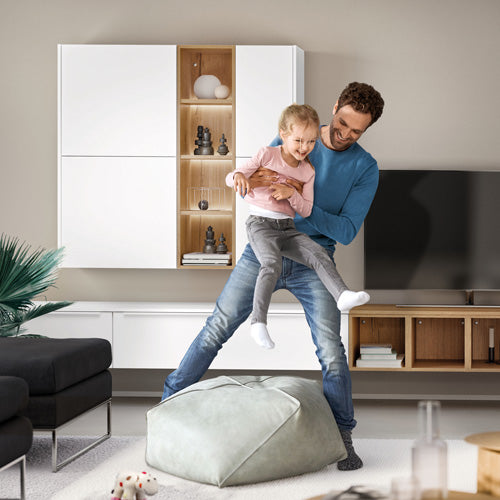
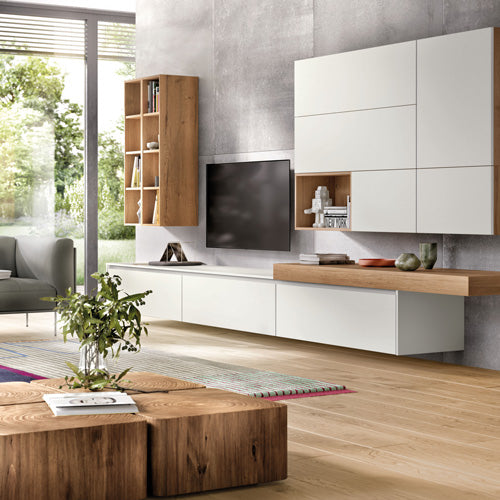
- Dining and living rooms: An individual living wall can be created from lowboards, wall cabinets, display cabinets, and shelves, coordinated with the adjacent kitchen. A handleless design can be seamlessly continued here.
- Home office: A functional workspace can be planned as a lowered extension of the countertop (ergonomic desk height approx. 72 to 75 cm as opposed to the kitchen work height of approx. 90 to 95 cm) or integrated as a completely hidden office in a cabinet.
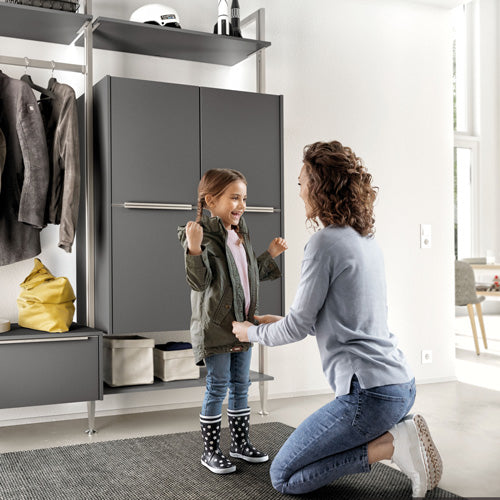
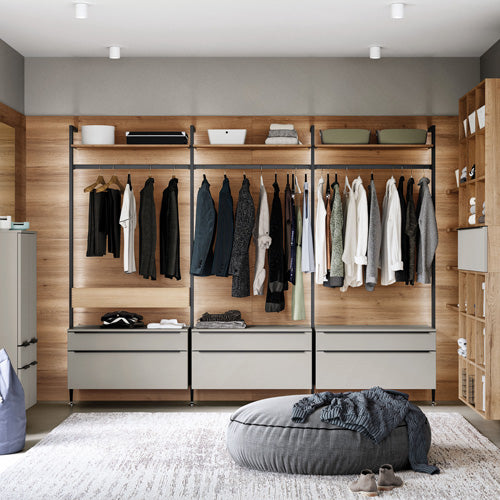
- Wardrobe and entrance area: The concept can start with matching wardrobe cabinets, benches, and panels in the entrance area to create a unified first impression. Modules for shoe storage or clothes rails are often used here.
- Utility room: Functional areas can also be equipped with the robust and more moisture-resistant materials of the kitchen to ensure a consistent and durable look.

4. Critical Consideration: Advantages and Disadvantages of the Unified Look
The decision for a fully designed concept from a single manufacturer should be made consciously.
Advantages
- Visual harmony: The result is a very calm, coherent, and architecturally appealing overall picture. Colors, materials, and joint patterns are perfectly coordinated.
- Planning security: The entire living space can be designed by a single planner. This reduces complexity and the risk of wrong decisions when combining products from different manufacturers.
- Uniform quality standard: The durable and robust materials and fittings from kitchen construction are transferred to the living area, often meaning higher mechanical quality than standard living furniture.
Disadvantages and risks
- Risk of monotony: A "home made from one mold" can appear uniform, sterile, and impersonal. The charm and tension created by individually combining furniture pieces of different styles, materials, and eras (e.g., a modern sideboard next to an inherited armchair) are lost.
- Costs: Living furniture from kitchen manufacturers' ranges is often significantly more expensive than comparable specialized furniture from furniture retailers. This is due to the more elaborate, kitchen-typical construction and higher-quality fittings.
- Inflexibility: The system is self-contained. It is difficult to later exchange or add individual pieces of furniture without disturbing the harmony, especially if a front program is discontinued after a few years.
5. Alternatives to the Holistic Manufacturer Concept
The curated furnishing: The conscious combination of kitchen furniture with individual pieces from other manufacturers, designers, or eras. This requires more planning effort and a sure sense of design but leads to a more personal and individual result. To still create a visual connection, a guiding material or color concept can be defined.
- Material anchor: The deliberate repetition of a material. For example, the wood of the kitchen countertop is found again in the dining table or in the shelves of the living room.
- Color anchor: The repetition of an accent color. The color of the niche backsplash can be reflected in the cushions on the sofa or a piece of art on the wall.
-
Form anchor: The repetition of a formal language, for example, the combination of linear kitchen furniture with equally linear living furniture from another manufacturer.
The kitchen from the carpenter/joiner: The manufacture of the kitchen and matching living furniture by a craft business is the original form of the "holistic concept".
- Advantages: Offers the highest degree of individuality in material and dimensions. Perfect adaptation to architectural conditions such as slanted walls is possible. Communication is direct with the manufacturer.
- Disadvantages: Often the most costly solution. The service and warranty process differs from that of a large industrial company. The quality of the result depends heavily on the expertise of the selected company.
6. Conclusion on Holistic Furnishing
The development of the kitchen as a design starting point for the entire living space is a logical response to the demands of open living. It offers high planning security and a visually very harmonious result. Whether this approach suits the personal style is an individual decision. It is a balance between the calm perfection of a consistent system and the livelier, more personal character of a curated furnishing, where furniture of different origins is consciously combined. A conscious decision should consider the advantages and disadvantages of both philosophies as well as the respective cost structures.
View full article


Effektive Raumnutzung und Beleuchtungskonzepte in der modernen Küche
Viele Küchen leiden unter ungenutztem Stauraum und fehlender Beleuchtung in der Küche. Praxisorientierte Konzepte ermöglichen optimale Raumnutzung und funktionale, stimmungsvolle Küchenbeleuchtung. Tipps reichen von deckenhohen Schränken bis zu smarten Lichtkonzepten für perfektes Licht und maximale Funktion.
View full article

Farbtrends in der Küche: So schaffen Sie Ruhe und Natürlichkeit
Sterile Küchen wirken unpersönlich und kalt. Sanfte Erdtöne als Wandfarbe in der Küche schaffen eine warme, natürliche Atmosphäre. Küchentrends 2025 zeigen, wie Sie Ruhe und Geborgenheit erreichen.
View full article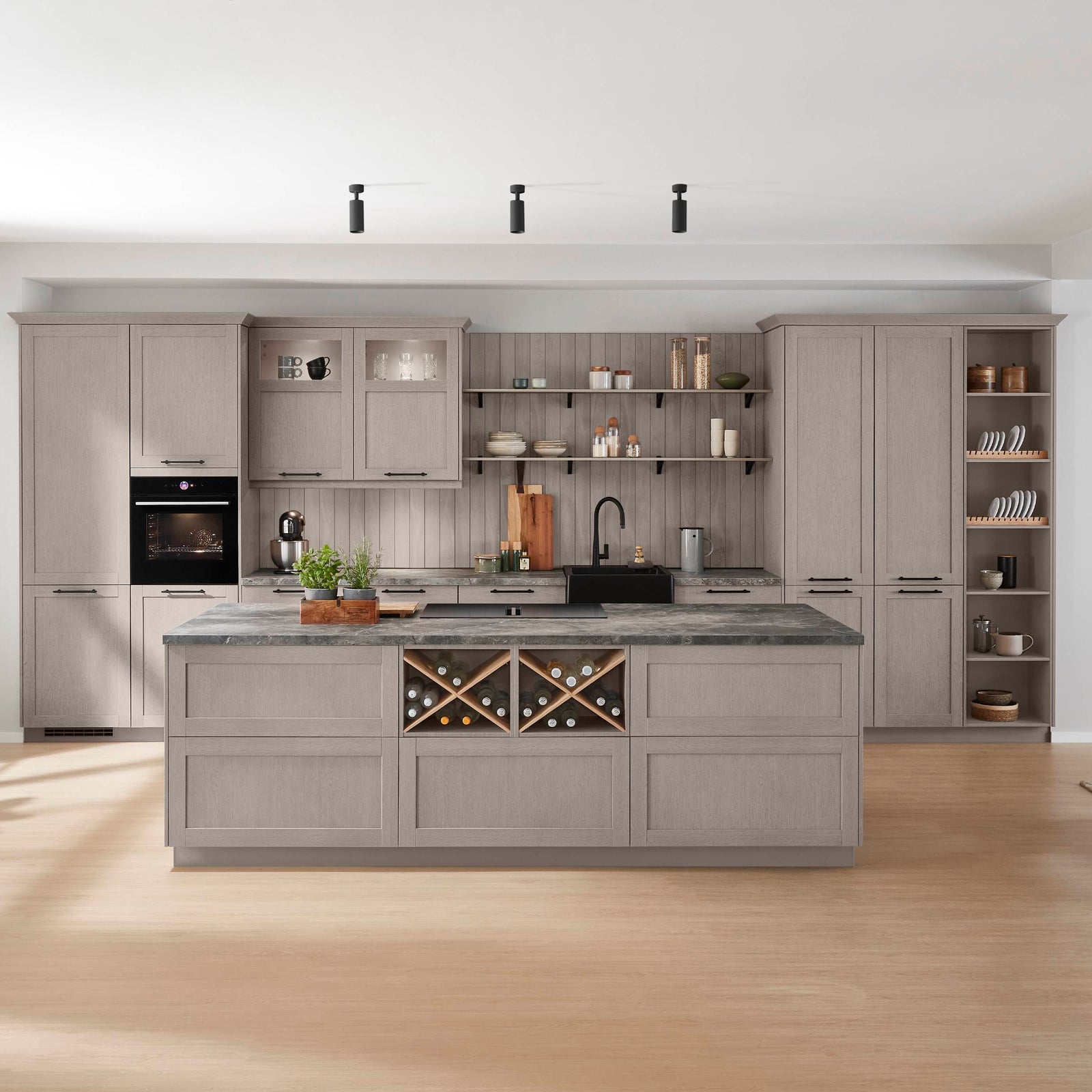

Die moderne Landhausküche im Kontext von Design und Funktionalität
Die moderne Landhausküche setzt 2025 auf rustikale Holzfronten und klare Formen für zeitgemäße Funktionalität im Landhausstil. Als Experte für Küche und Einrichtung stelle ich Farbtrends wie Schilf, Steinblau und Sand vor und zeige elegante Gestaltungsmöglichkeiten. Praxisorientierte Tipps zu Rahmenfronten, ergonomischer Ausstattung und Materialwahl runden den Beitrag ab.
View full article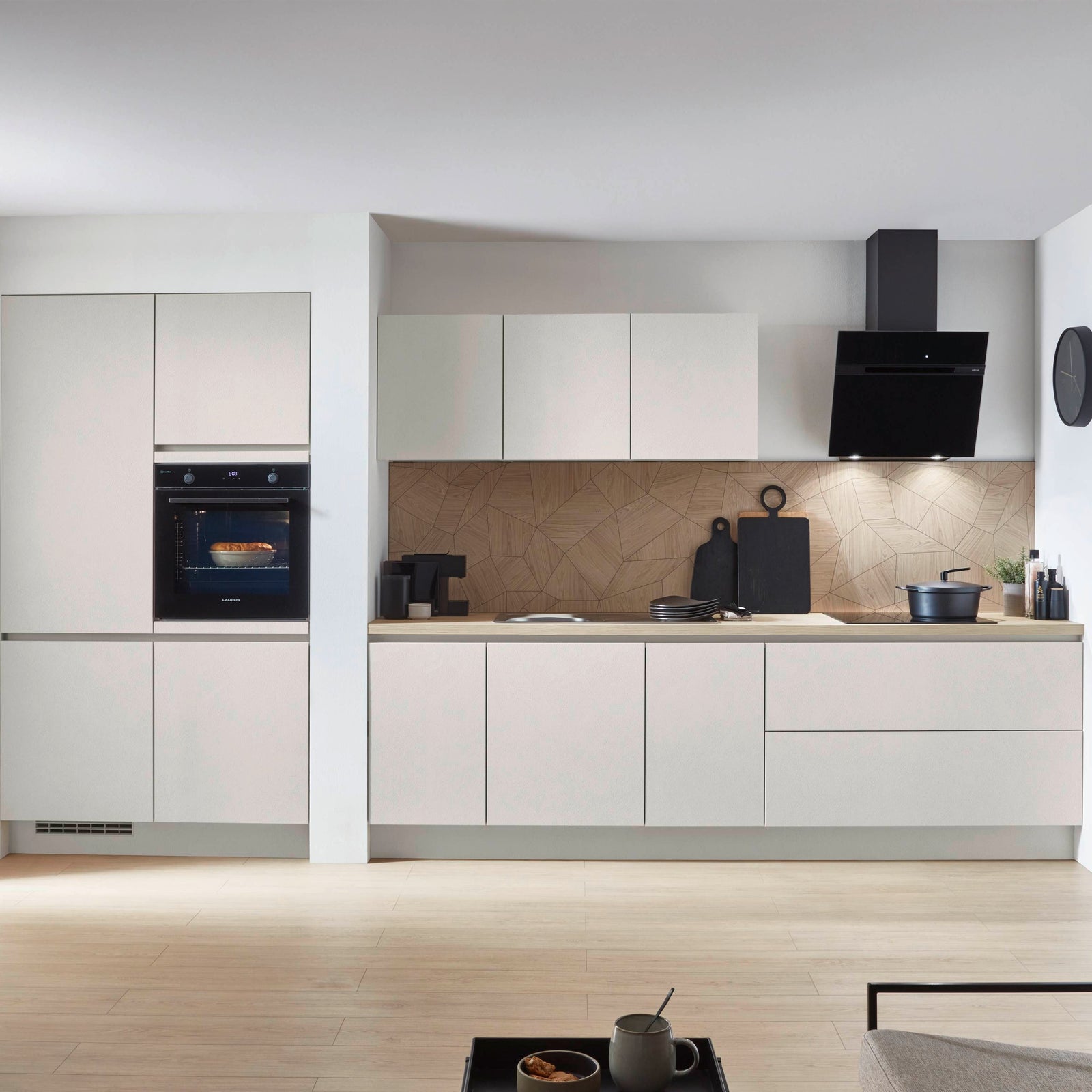

Strategien zur Küchenplanung im Einstiegssegment: Qualität und Standardisierung bei nobilia Küchen
Viele Verbraucher stehen vor undurchsichtigen Küchenpreisen und wissen nicht, worauf es bei nobilia Küchen im Einstiegssegment ankommt. Fundierte Strategien zur Auswahl preisgünstiger Einstiegsprogramme und standardisierter Planung sorgen für transparente Kosten und geprüfte Qualität. Der Leitfaden bietet klare Schritte zur funktionalen neuen Küche zum fairen Preis.
View full article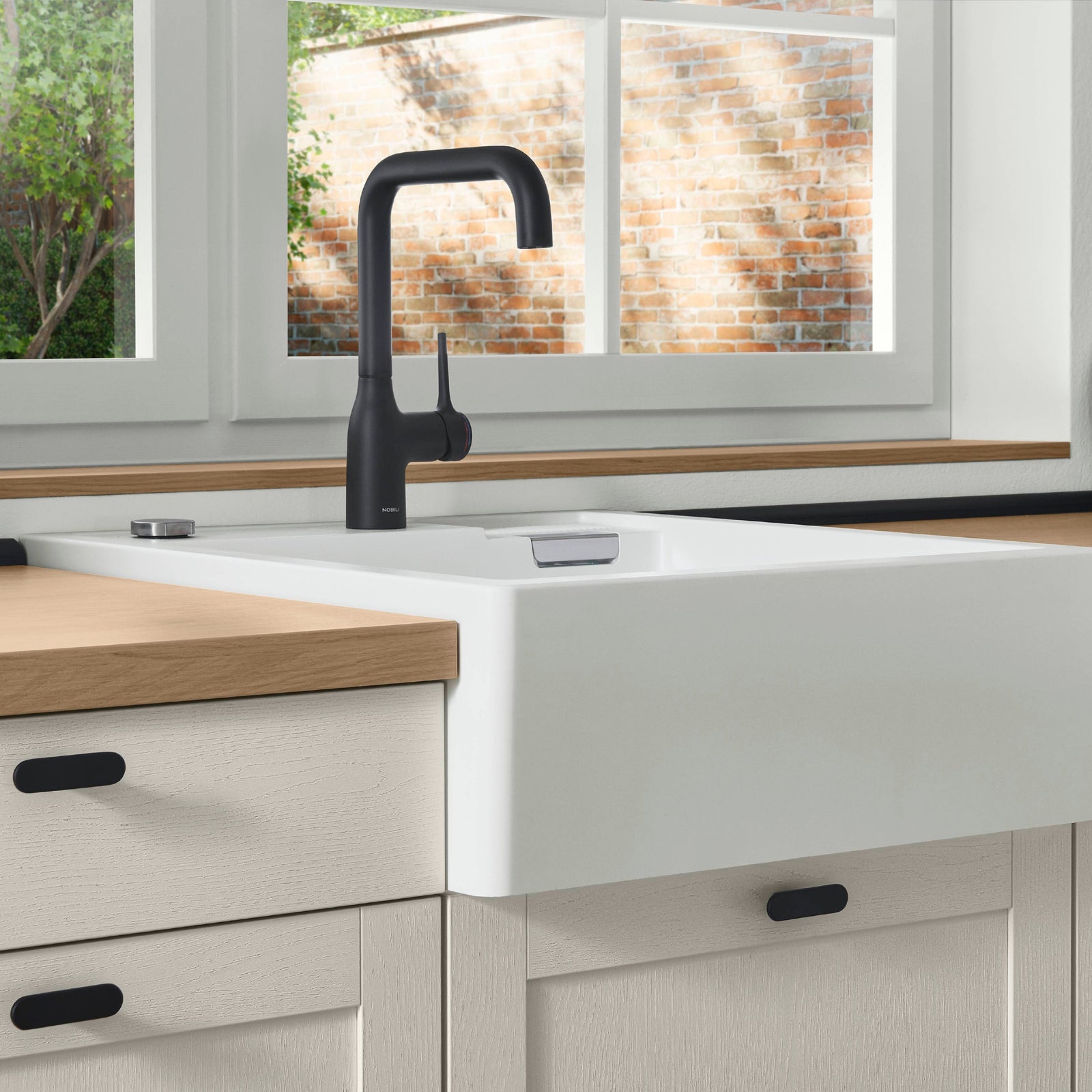

Optionen zur Individualisierung in der modernen Küchenplanung
Viele Küchen folgen noch festen Vorgaben und wirken dadurch unflexibel. Die Analyse aktueller Nobilia-Produktlinien zeigt, wie moderne Küchenplanung modulare Baukastenprinzipien und vielfältige Materialkombinationen für echte Individualisierung nutzt. Küchentrends 2024 in der Küchengestaltung liefern Beispiele für Frontdesign, Griffdetails und nBOX-Schubkastensystem.
View full article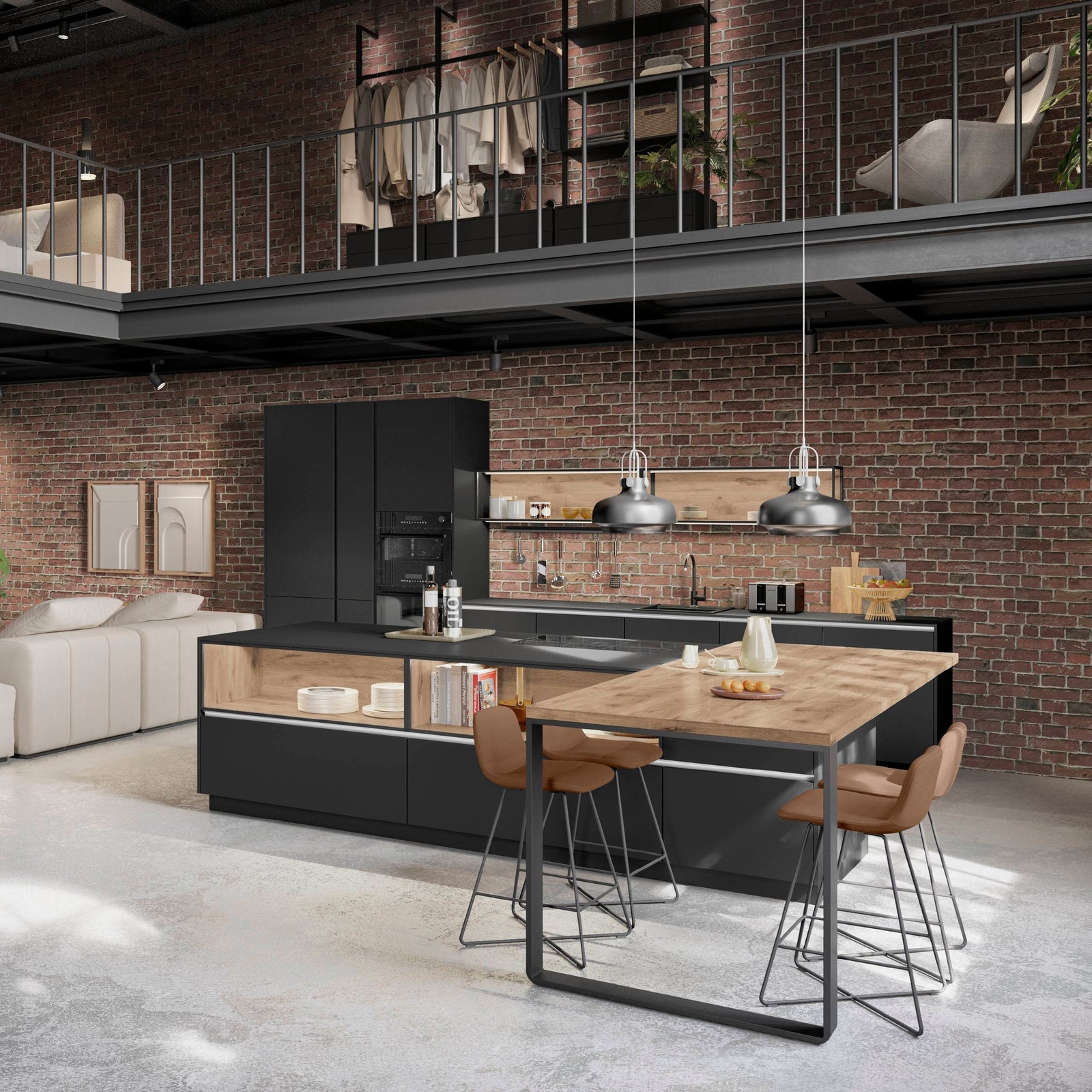

Raumübergreifende Planungskonzepte: Die Integration von Küche und Wohnraum
70 Prozent der Neubauwohnungen setzen heute auf offene Grundrisse und fordern frische Lösungen für Küche und Wohnraum. Als Fachplaner für aktuelle Küchentrends präsentiere ich praxisorientierte Konzepte mit modularen Nobilia Systemen und einheitlichen Dekoren. Leser profitieren von umsetzbaren Tipps zu Materialbrücken, Beschlagtechnik und ganzheitlichen Wohnkonzepten.
View full article Effektive Raumnutzung und Beleuchtungskonzepte in der modernen Küche
Viele Küchen leiden unter ungenutztem Stauraum und fehlender Beleuchtung in der Küche. Praxisorientierte Konzepte ermöglichen optimale Raumnutzung und funktionale, stimmungsvolle Küchenbeleuchtung. Tipps reichen von deckenhohen Schränken bis zu smarten Lichtkonzepten für perfektes Licht und maximale Funktion.
View full article Farbtrends in der Küche: So schaffen Sie Ruhe und Natürlichkeit
Sterile Küchen wirken unpersönlich und kalt. Sanfte Erdtöne als Wandfarbe in der Küche schaffen eine warme, natürliche Atmosphäre. Küchentrends 2025 zeigen, wie Sie Ruhe und Geborgenheit erreichen.
View full article Die moderne Landhausküche im Kontext von Design und Funktionalität
Die moderne Landhausküche setzt 2025 auf rustikale Holzfronten und klare Formen für zeitgemäße Funktionalität im Landhausstil. Als Experte für Küche und Einrichtung stelle ich Farbtrends wie Schilf, Steinblau und Sand vor und zeige elegante Gestaltungsmöglichkeiten. Praxisorientierte Tipps zu Rahmenfronten, ergonomischer Ausstattung und Materialwahl runden den Beitrag ab.
View full article