Your cart is empty









Küche



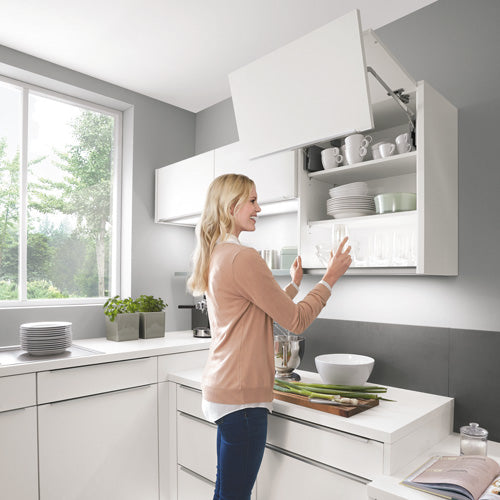



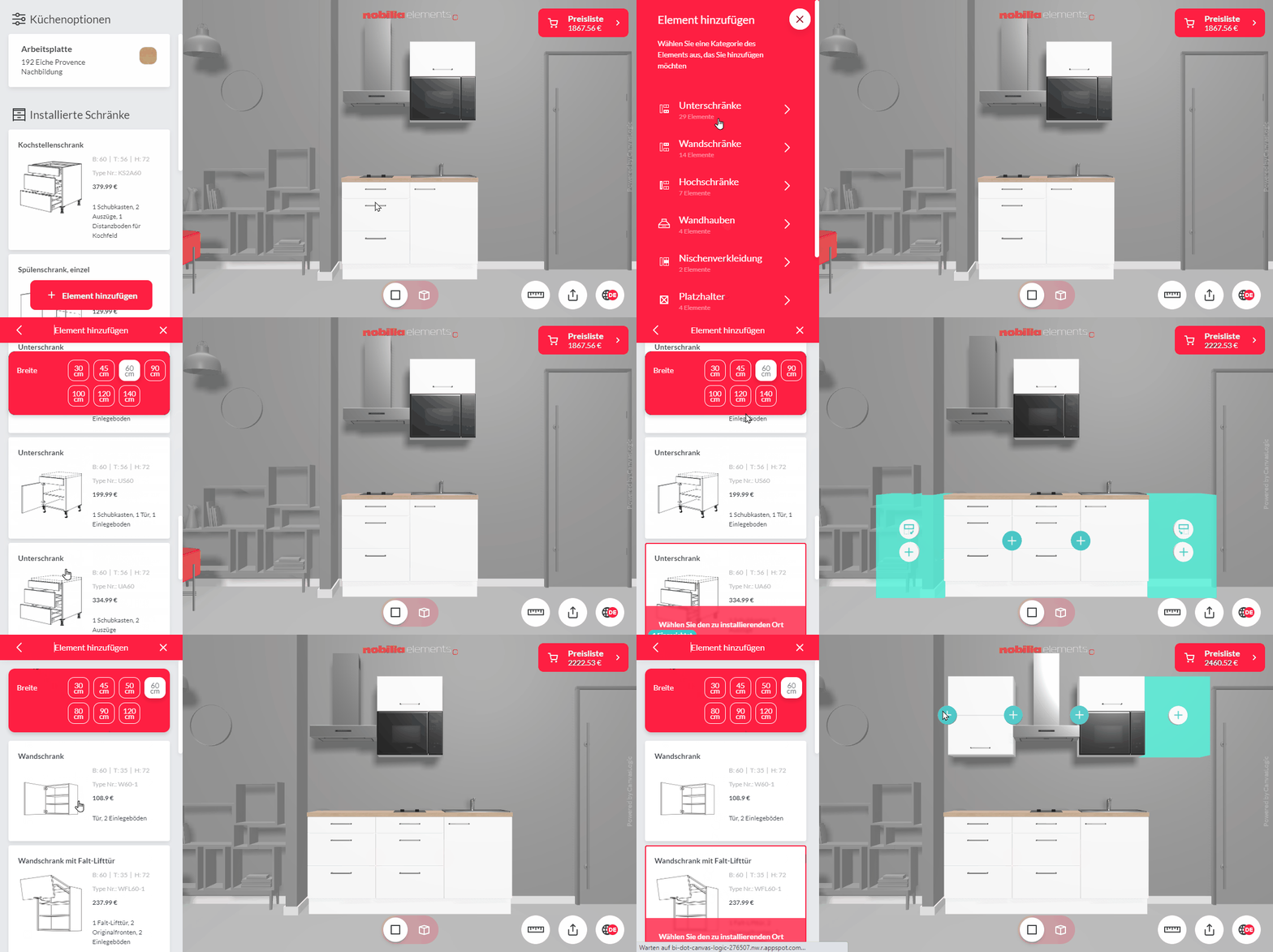
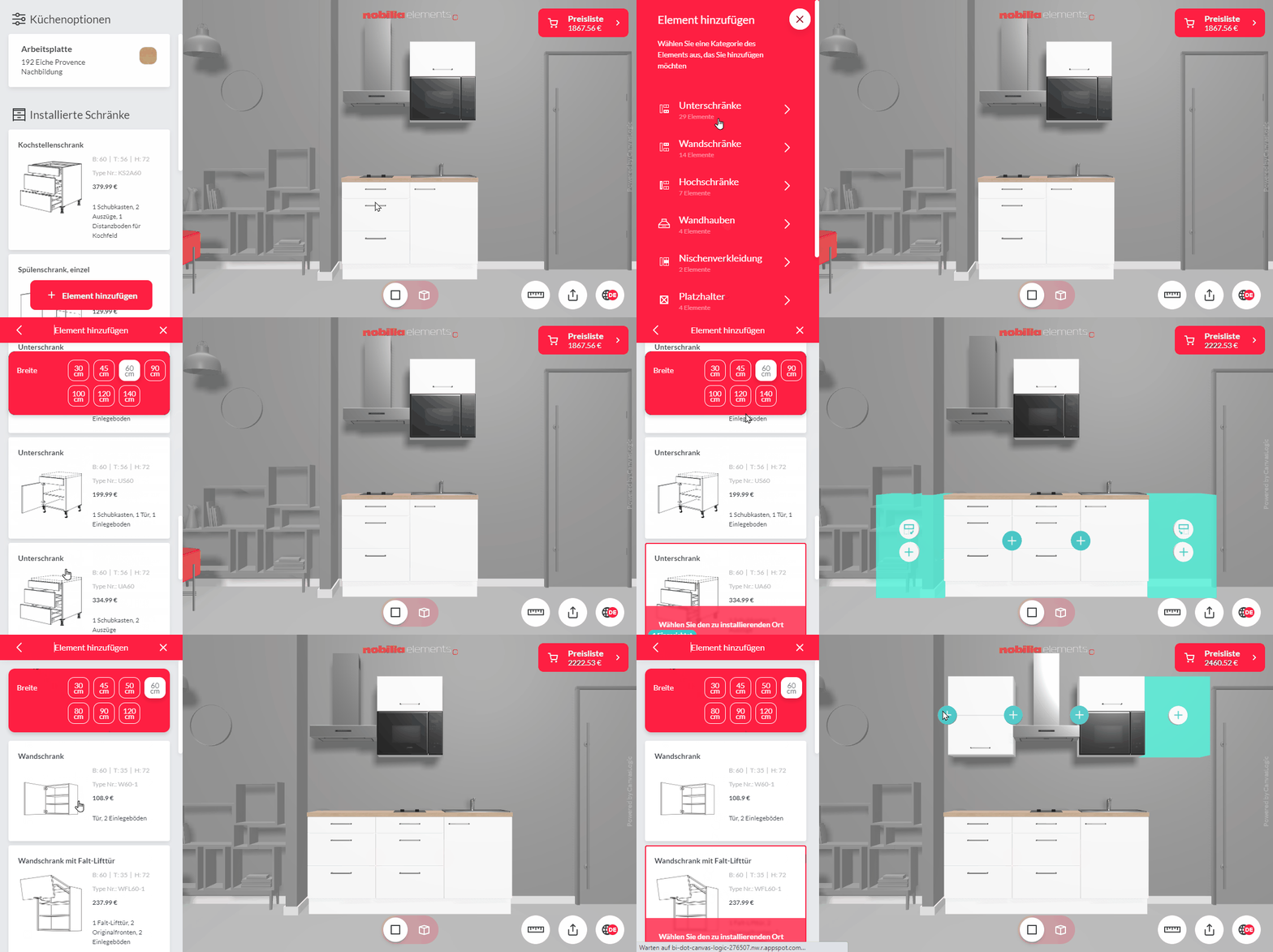
3D ONLINE KÜCHENPLANER




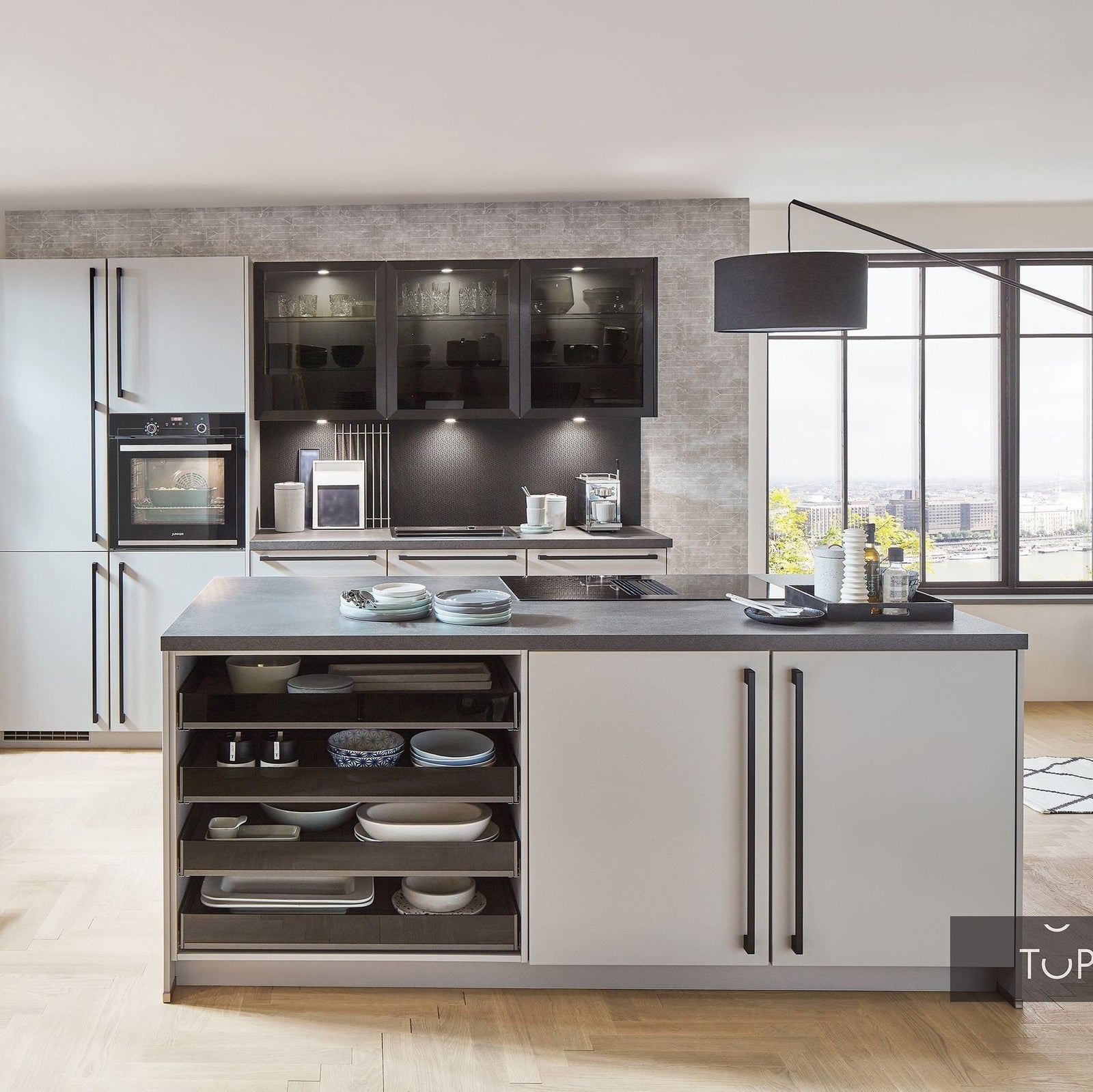

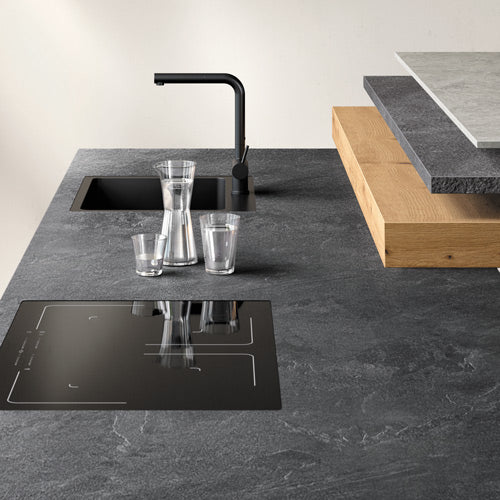
Faster, safer, cleaner cooktops: Why induction is almost always the best choice today
Choosing the cooktop is a crucial technical decision in kitchen planning. It directly affects speed, safety, energy efficiency, and cleaning effort during daily cooking. Technological development in recent years, especially in the field of induction cooktops, has led to a variety of functions and designs. This guide offers a structured and critical overview of the basic technologies, explains modern features, and highlights important aspects for an informed purchase decision.

1. The fundamental technological decision for your cooktop
Every technology has specific physical properties that differ greatly in handling, efficiency, and installation requirements.
Induction
- How it works: Copper coils under the glass-ceramic surface generate a high-frequency electromagnetic field. This field induces eddy currents directly in the bottom of the ferromagnetic cookware, heating it. The cooktop surface itself is not actively heated but only warms secondarily through the residual heat of the pot.
-
Advantages:
- Speed and Efficiency: Induction is very fast because the energy acts directly and with minimal loss on the pot bottom. One liter of water often boils in less than three minutes. This makes it the most energy-efficient way to cook electrically.
- Safety: The cooktop surface remains comparatively cool, minimizing the risk of burns. An integrated pot detection ensures that the zone automatically switches off when no suitable cookware is on it.
- Easy cleaning: Boiled-over food does not burn on stubbornly because the surface temperature remains low.
- Precise control: The energy supply can be regulated very quickly and finely, similar to a gas cooktop.
- Disadvantages: The purchase price is higher than for a glass-ceramic cooktop. Special magnetizable cookware is required (stainless steel with ferromagnetic base, cast iron). Whether a pot is suitable can be easily tested with a magnet on the pot bottom.
Glass-ceramic (radiant heating)
- How it works: Heating coils under the glass plate heat up and transfer heat to the cookware via infrared radiation. The cooking zone visibly glows red.
- Advantages: Cheaper to purchase and compatible with any cookware (ceramic, glass, aluminum, copper).
- Disadvantages: The system is sluggish; it heats up slowly and cools down slowly, making regulation difficult. It has higher energy consumption due to waste heat and a high risk of burns from the hot plate. Burnt-on food often needs to be removed with a special glass scraper.
Gas
- How it works: Cooking with an open flame generated by the combustion of natural or liquefied gas.
- Advantages: Heat is immediately available and can be continuously and visually well regulated. Operating costs can be lower depending on energy prices.
- Disadvantages: A gas connection is required. Cleaning the individual burners, burner caps, and pot supports is more laborious than wiping a smooth glass surface. Modern devices have a thermoelectric ignition safety device that cuts off the gas supply if the flame goes out; nevertheless, the open flame poses a higher safety risk compared to induction.
2. Induction cooktop: Modern features and designs
Flexible cooking zones: Instead of four fixed round cooking zones, many devices offer flexible rectangular areas. The following distinctions are made:
- Bridge function: Two consecutive round cooking zones can be linked to form an elongated zone for a roasting pan.
- True flex zones: Several square induction coils are placed under a rectangular surface. The cooktop automatically detects the size and position of the cookware and activates only the coils directly underneath. This offers maximum flexibility.
- Full-surface induction: The premium variant where the entire surface forms a single cooking zone. Multiple pots can be placed and moved freely here, with their temperature settings retained. However, this is very costly.
-
Integrated extractor (downdraft extractor): The extractor is built directly into the cooktop and sucks the steam (vapors) downward. The system uses the principle of crossflow, which is stronger than the natural rising speed of warm steam.
- Advantages: Makes a range hood unnecessary, which allows for a minimalist look, especially with kitchen islands and in open kitchens.
- Disadvantages: Higher purchase costs, loss of storage space in the base cabinet for the motor unit, filter cassette, and flat air ducts. Additionally, efficiency in capturing steam from very tall pots can be physically limited. Cleaning the internal components is more complex.
-
Integrated sensors:
- Frying sensors: Monitor the temperature in the pan and keep it constant. This prevents overheating of oil and leads to more even frying results.
- Cooking sensors: Attached externally to the pot, they measure the temperature of the contents and communicate wirelessly with the cooktop to regulate power and prevent boiling over.

3. Surface technologies and design
Special surface coatings: Some manufacturers offer cooktops with special finishes.
- Scratch-resistant surfaces: Here, the glass ceramic is coated with an additional, extremely hard layer to make it more resistant to fine scratches caused by sliding pots.
- Easy-to-clean surfaces: Special nano-coatings are designed to prevent food residues from sticking and burning on, making cleaning easier. These technologies come with a significant surcharge. Their long-term durability under real usage conditions is an important consideration.
Domino cooktops: These are narrow, single cooking modules (usually 30 to 40 cm wide) that can be individually combined into a cooking station. For example, two induction plates can be combined with a gas wok burner, a teppanyaki grill, or a deep fryer. This allows for a customized cooking center but requires precise planning of the countertop cutouts and the cabinet construction underneath.
4. Technical requirements and operating concepts
Electrical connection value: This is a crucial technical aspect. Most powerful cooktops with more than two cooking zones require a 3-phase three-phase current connection (high voltage with 400 V), which is not standard in every kitchen, especially in older buildings. This must be checked by a qualified electrician before purchase. The connection may only be made by a professional.
-
Control concepts:
- Touch control with plus and minus buttons: The simplest form of operation. Each level must be tapped individually.
- Touch slider: The power level is adjusted by sliding over a linear or circular bar, allowing faster and finer control. Function may be impaired with wet or greasy fingers.
- Direct selection buttons: Each power level has its own number (e.g., 1 to 9) that can be selected directly. This is very fast and clear.
- Magnetic control knobs: Removable magnetic rotary knobs combine the tactile feel of a classic switch with the cleaning convenience of a smooth glass surface. They can be removed for cleaning.
5. Essential safety features
Modern cooktops have a range of standard safety features:
- Child lock: Locks the control panel to prevent accidental activation.
- Safety shut-off: Automatically switches off a cooking zone after a defined maximum operating time if the user forgets.
- Residual heat indicator: Indicates which cooking zones are still hot after use.
- Overheat protection: Sensors monitor the temperature of components and shut off the device in case of overheating.

6. Conclusion and guiding questions for planning
For most modern households, the induction cooktop is the technologically most sensible choice due to its advantages in speed, safety, energy efficiency, and ease of cleaning. The decision lies in the details and prioritization of features.
The following questions can help with the selection:
- Technical requirements: Is a high-voltage connection available in my kitchen, or does it need to be retrofitted?
- Cooking habits: Which pot and pan sizes do I use most often? Do I need the flexibility of bridge or flex zones for large cookware?
- Aesthetics and budget: How important is a minimalist look without a range hood to me, and am I willing to accept the extra cost and loss of storage space for a downdraft extractor?
- Durability and care: How important is a completely scratch-free appearance to me, and what is this protection through a special coating worth to me?
- Ease of use: Which control concept (slider, knob, etc.) do I find most intuitive and practical for my daily cooking?
A modern cooktop is an investment for over a decade. Choosing a technology that facilitates your cooking processes and fits the technical conditions is crucial for long-term satisfactory use.
View full article
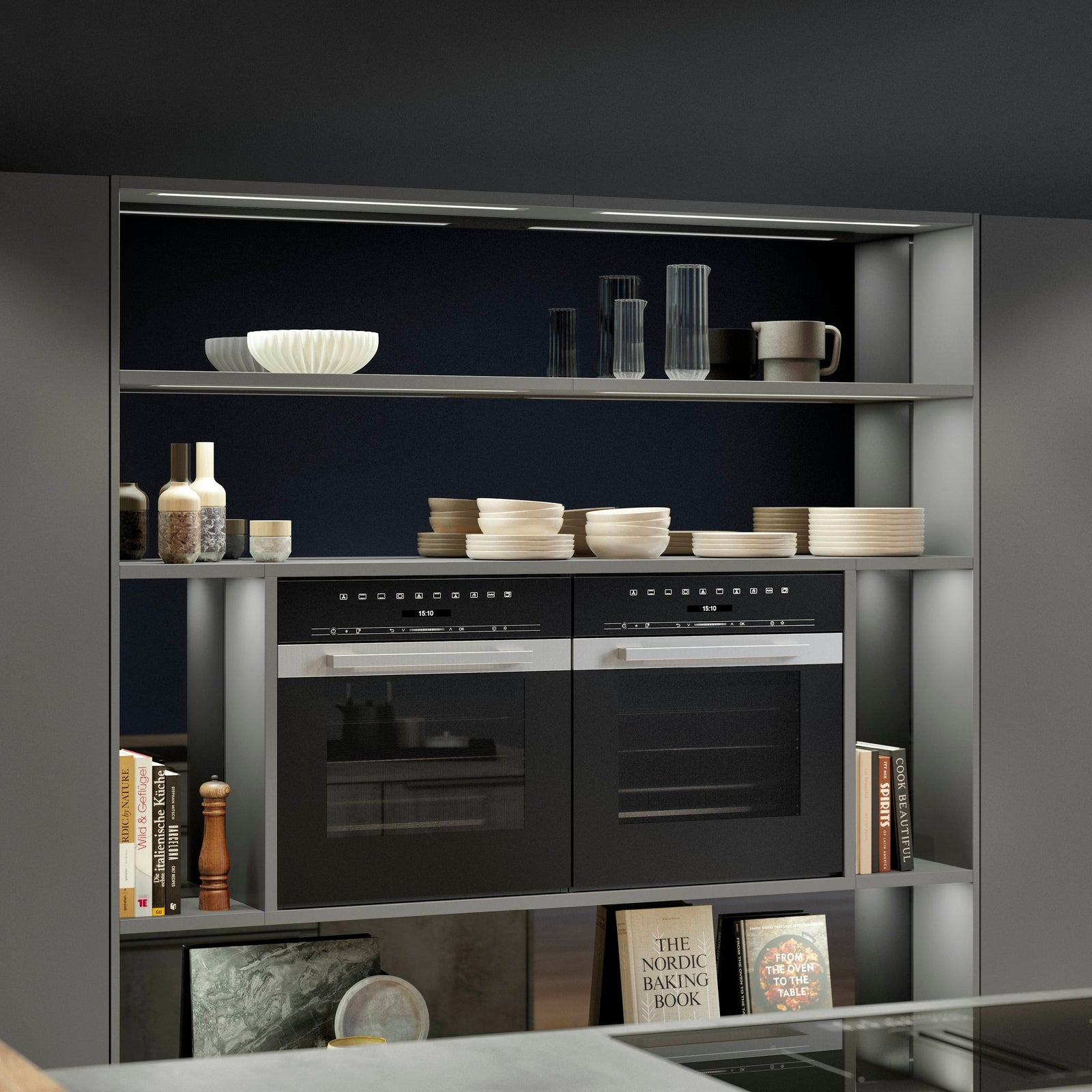

Gerätetechnische Erweiterungen im Nobilia-Portfolio 2026
Moderne Küchen verlangen einfache Wartung und vielseitige Küchengeräte. Nobilia präsentiert 2026 mit dem BORA GPNext und exklusiven Electrolux-Neuheiten technische Erweiterungen für das mittlere Segment. Diese Innovationen beschleunigen den Filterwechsel und bieten Planern eine zentrale Lösung, ein Highlight unter den Küchentrends 2026.
View full article

Effektive Raumnutzung und Beleuchtungskonzepte in der modernen Küche
Viele Küchen leiden unter ungenutztem Stauraum und fehlender Beleuchtung in der Küche. Praxisorientierte Konzepte ermöglichen optimale Raumnutzung und funktionale, stimmungsvolle Küchenbeleuchtung. Tipps reichen von deckenhohen Schränken bis zu smarten Lichtkonzepten für perfektes Licht und maximale Funktion.
View full article

Farbtrends in der Küche: So schaffen Sie Ruhe und Natürlichkeit
Sterile Küchen wirken unpersönlich und kalt. Sanfte Erdtöne als Wandfarbe in der Küche schaffen eine warme, natürliche Atmosphäre. Küchentrends 2025 zeigen, wie Sie Ruhe und Geborgenheit erreichen.
View full article

Natursteinoberflächen reinigen und pflegen
Wussten Sie, dass unsachgemäße Pflege die Lebensdauer Ihrer Küchenarbeitsplatte aus Naturstein um bis zu 50 % verkürzen kann? Mit jahrelanger Erfahrung in Küchenmöbeln und Natursteinflächen liefere ich klare Tipps zur Reinigung, Imprägnierung und Fleckenschutz. So bleibt Ihre Arbeitsplatte makellos und langlebig.
View full article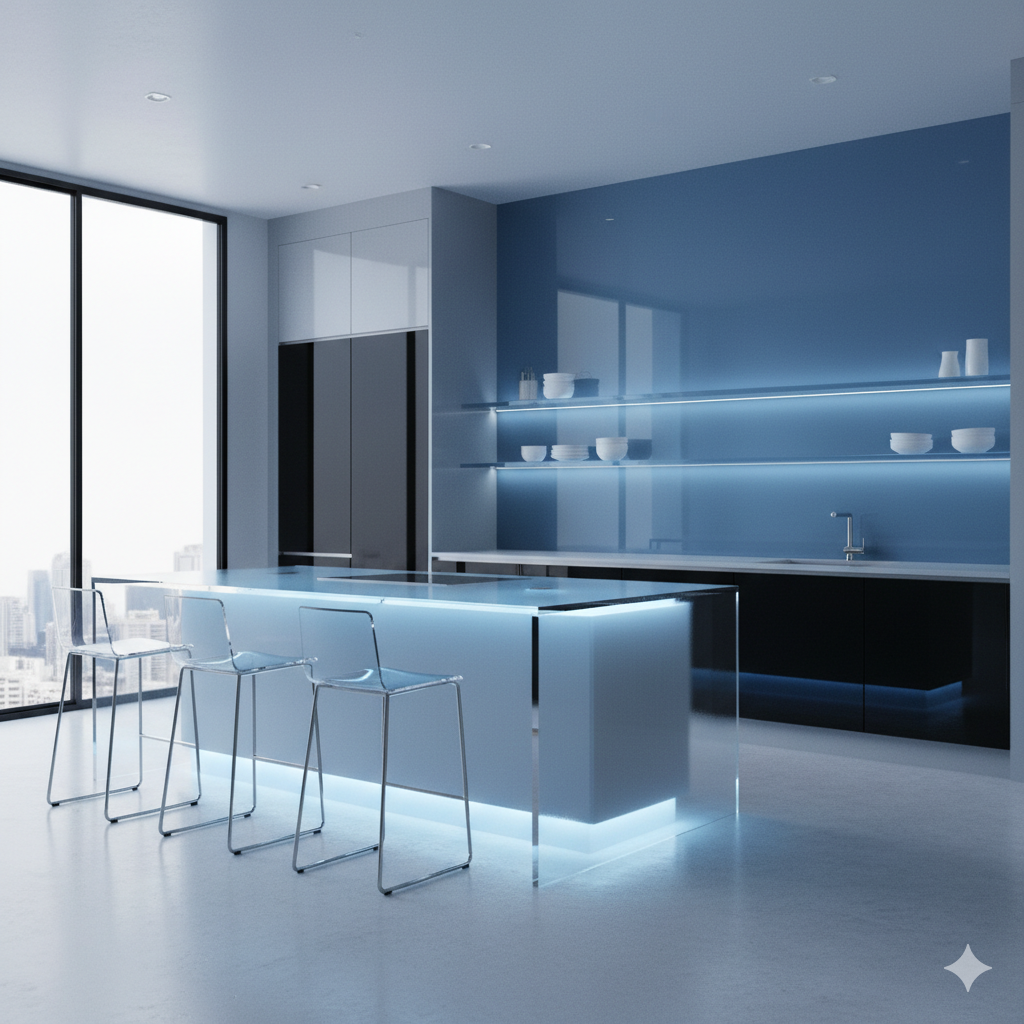

Polymerglas in Küche und Wohnraum
Falsche Reinigung kann Polymerglas in Ihrer Küche dauerhaft schädigen. Optimierte Pflegehinweise für Smartglas verhindern Trübungen und Spannungsrisse. Praxisnahe Tipps sorgen für schonende Reinigung und langfristige Werterhaltung Ihrer Küchenfronten.
View full article

Reinigung und Pflege von Kühlschrank und Geschirrspüler
Kühlschrank und Geschirrspüler leiden unter verstopften Kondenswasserabläufen und verschmutzten Dichtungen. Als Profi für Küchengerätewartung zeige ich praxisnahe Tipps für kühlschrank richtig reinigen, Geschirrspülerpflege und effektive Filterkontrolle. So vermeiden Sie Schimmel, senken den Energieverbrauch und verlängern die Lebensdauer Ihrer Geräte.
View full article Gerätetechnische Erweiterungen im Nobilia-Portfolio 2026
Moderne Küchen verlangen einfache Wartung und vielseitige Küchengeräte. Nobilia präsentiert 2026 mit dem BORA GPNext und exklusiven Electrolux-Neuheiten technische Erweiterungen für das mittlere Segment. Diese Innovationen beschleunigen den Filterwechsel und bieten Planern eine zentrale Lösung, ein Highlight unter den Küchentrends 2026.
View full article Effektive Raumnutzung und Beleuchtungskonzepte in der modernen Küche
Viele Küchen leiden unter ungenutztem Stauraum und fehlender Beleuchtung in der Küche. Praxisorientierte Konzepte ermöglichen optimale Raumnutzung und funktionale, stimmungsvolle Küchenbeleuchtung. Tipps reichen von deckenhohen Schränken bis zu smarten Lichtkonzepten für perfektes Licht und maximale Funktion.
View full article Farbtrends in der Küche: So schaffen Sie Ruhe und Natürlichkeit
Sterile Küchen wirken unpersönlich und kalt. Sanfte Erdtöne als Wandfarbe in der Küche schaffen eine warme, natürliche Atmosphäre. Küchentrends 2025 zeigen, wie Sie Ruhe und Geborgenheit erreichen.
View full article