Your cart is empty






Küche





3D ONLINE KÜCHENPLANER






Kitchen planning without stress: The ultimate roadmap from the first idea to installation
Purchasing a new kitchen is a complex project and a significant investment in living quality, designed for a usage period of 15 to 20 years. Given the variety of styles, materials, and technical options, the planning process can quickly become overwhelming. A successful outcome, which not only meets aesthetic demands but also functions reliably in everyday life, is based on thoughtful and systematic preparation. Careful planning is the most effective method to avoid costly mistakes and later dissatisfaction. This guide leads you through the crucial phases of the planning process in a structured way and provides the necessary tools for informed decision-making.

Phase 1: Preparation - The foundation for successful kitchen planning
The most important planning work takes place before you enter a kitchen studio. The clearer your ideas and the more precisely you have analyzed your own needs, the more efficient and targeted the later professional planning will be. Take enough time for this phase.
1.1 The reality check: Budget, schedule, and structural conditions
- Budget definition: Set a realistic financial framework. A detailed budget should not only cover the costs for kitchen furniture and appliances but also items for delivery and installation, possible dismantling and disposal of the old kitchen, as well as a buffer of 10 to 15 percent for unforeseen structural adjustments. These adjustments often include relocating electrical or water connections, painting work, or adapting the flooring.
- Scheduling: Define a rough timeline. Consider that the delivery time for a custom-designed kitchen can vary between six and twelve weeks or longer depending on the manufacturer and season. Also, plan additional time for preparatory work by electricians and installers.
- Structural analysis: Check the basic conditions. Are the walls load-bearing enough for heavy wall cabinets? Is the floor level? Are there architectural peculiarities like slanted walls that must be considered in the planning?
1.2 Needs analysis: An honest reflection of your own habits: A kitchen must fit your life, not the other way around.
- Usage profile: How many people live in the household? Are there children or pets, which place special demands on the durability of surfaces and safety? Who is the main user of the kitchen, and is this person right- or left-handed? This influences the logical arrangement of work zones.
- Cooking style: Do you cook fresh and elaborate meals daily or mainly on weekends? Do you bake often, which places special demands on the oven and workspace? Are there frequent social occasions where cooking together takes place?
- Functional requirements: Will the kitchen also be used for eating, working, or doing homework? This requires planning for integrated seating or work areas.
- Storage needs: Take an inventory. What needs to be stored? Consider dishes, pots, supplies, and small appliances. Plan not only for current needs but also for future purchases.
- Shopping behavior: Do you do a weekly big shop that requires a lot of space in the fridge and pantry, or do you shop fresh daily?
1.3 Measurements and spatial preliminary planning
- Measurements: Create as accurate a sketch of your kitchen space as possible. Measure all wall lengths, niches, and room height. Note the exact position, size, and opening direction of all windows and doors. A critical measurement is the window sill height, as it determines whether a continuous countertop can be planned in front of it.
- Connections: Mark the exact position of existing connections for water, wastewater, and high voltage (for the cooktop). Consider whether these must remain in their position or if relocation is possible within the budget. Relocating connections causes significant additional costs for electricians and installers and must be clarified early.
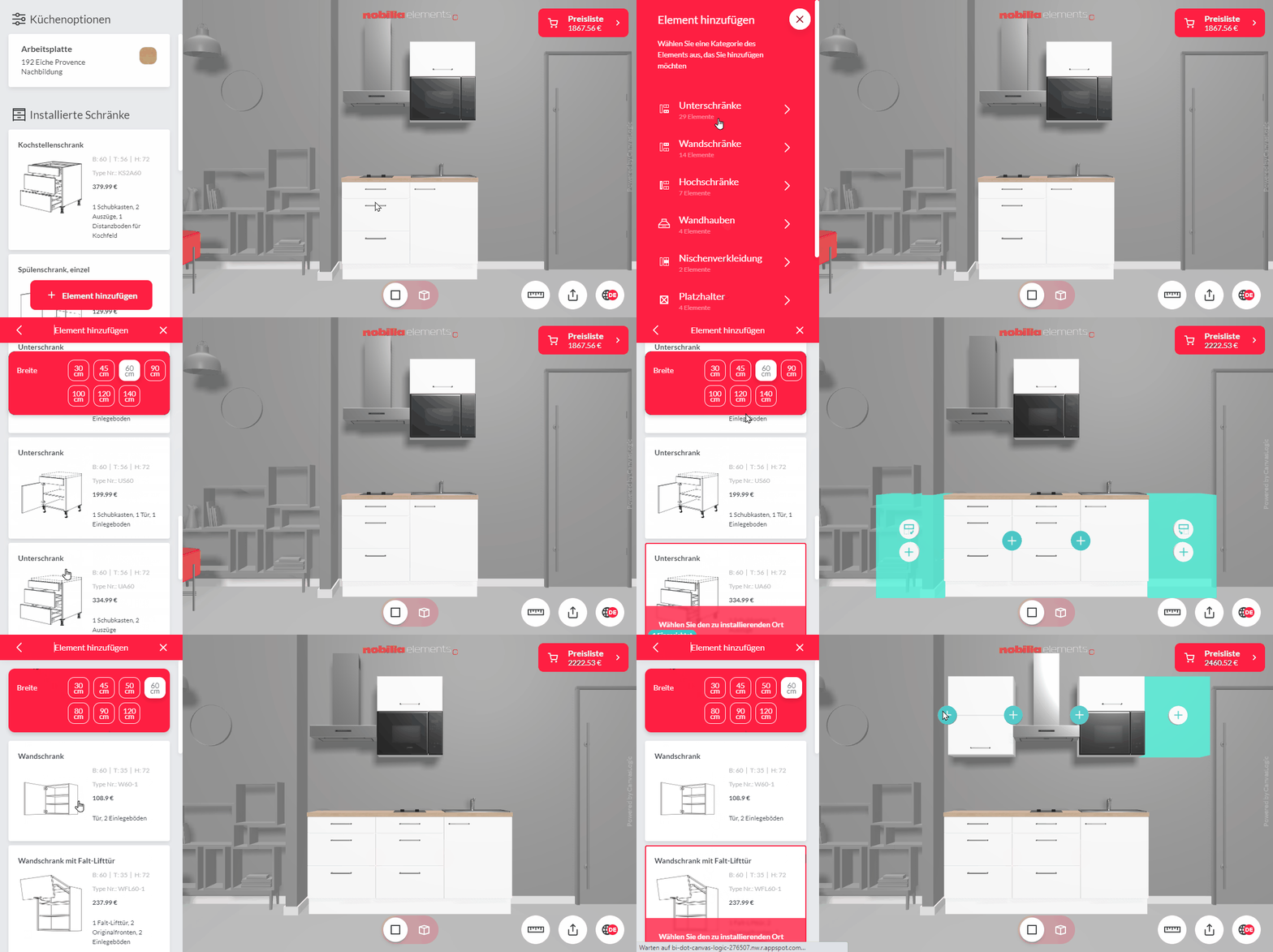
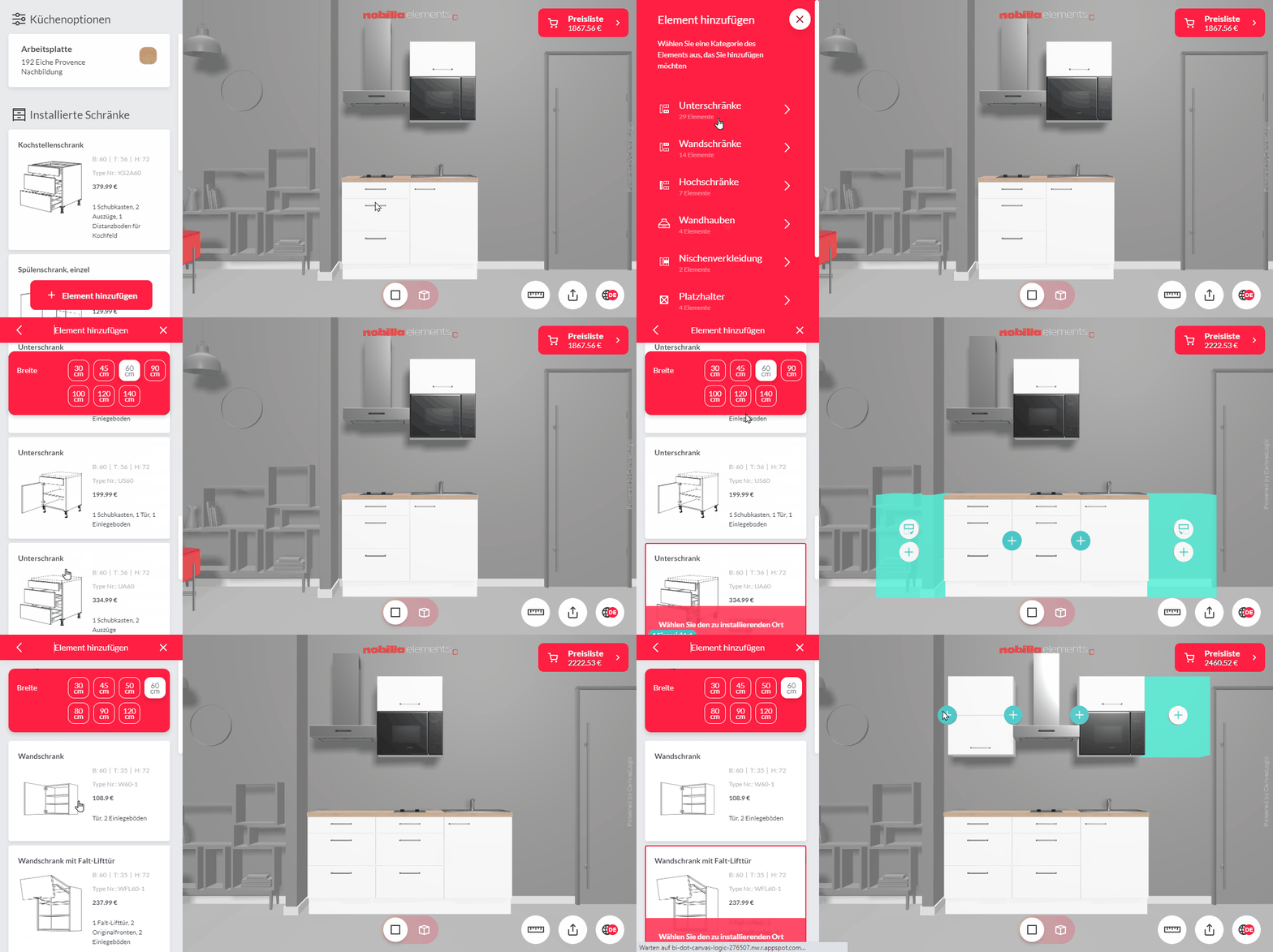
- Online kitchen planners: Free 3D kitchen planners offered by many manufacturers are a useful tool for initial visualization. You can recreate your floor plan, try out different kitchen shapes, and get a first feel for the spatial effect. Consider these tools as a digital sketchpad. However, be aware of their limitations: these programs cannot replace professional planning, as they do not detect ergonomic errors, do not consider technical standards, and often serve as marketing tools for collecting customer data.
Phase 2: The core planning - translating wishes into a functional structure
With your careful preparation, the actual planning now begins, ideally in collaboration with a professional planner.
2.1 The kitchen shape: The functional framework: The kitchen shape is primarily determined by the floor plan. A single-line kitchen is ideal for narrow rooms, a double-line for passage rooms. The L-shape is a flexible all-rounder, while the U-shape offers maximum storage space. For large, open living spaces, communicative solutions like a kitchen with an island are suitable.
2.2 Ergonomics: Adapting to the person: Ergonomics is the key to pain-free and comfortable work.
- Work height: The height of the countertop must be adjusted to your body size. The rule of thumb (distance from the floor to your elbow bent at a 90-degree angle minus 10 to 15 cm) is a good starting point.
-
The work zones: Instead of the traditional "work triangle," modern planning uses more flexible work zones:
- Stocking up: Refrigerator and pantry.
- Storage: Dishes and glasses, often near the dishwasher.
- Preparing/Washing: The main work surface with sink and integrated waste system.
- Cooking/Baking: Cooktop and oven. The logical arrangement of these zones (for right-handers clockwise) minimizes walking distances.
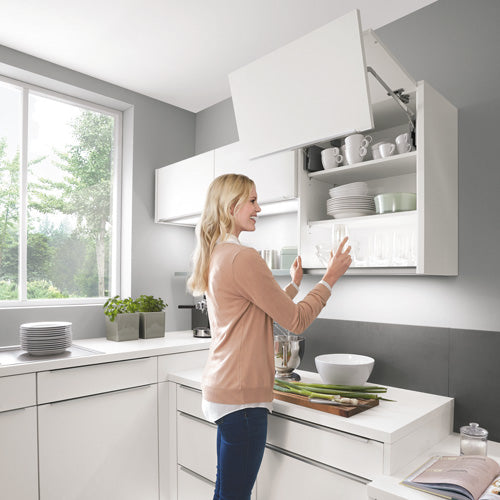
- Ergonomic cabinets and appliances: Consistently plan with full extensions instead of doors in the base cabinet and with flaps instead of hinged doors in the wall cabinet. Install oven and dishwasher at work height if possible.
2.3 Detailed planning: Storage, lighting, and electrical: Plan sufficient and well-organized storage space. A well-thought-out lighting concept of basic, task, and ambient lighting is essential. Consider enough sockets in the right places, especially in the main work area.

Phase 3: The offer and decision phase
This is the most critical phase, where collaboration with the trade partner and commercial aspects are in the foreground.
3.1 The role of the specialist planner: The professional kitchen planner brings in their expertise to shape your ideas into a feasible and optimized kitchen. They know the technical possibilities, advise on material selection, and optimize your planning. After contract conclusion, they will carry out a professional measurement and thus take responsibility for the fit.
3.2 Obtaining and comparing offers: Price structures in the kitchen trade are often opaque. It is therefore essential to obtain at least two to three detailed and comparable offers from different dealers. A reputable offer lists all furniture parts and appliances with exact article numbers and individual prices. Only in this way can you objectively compare the offers and have a solid basis for price negotiations. Be skeptical of flat high discounts without detailed breakdown.
3.3 Contract review: The result of good planning is a detailed contract. Insist that all components (furniture parts, appliance models with energy efficiency class), all agreed services (delivery, assembly, connections), and the binding delivery date (specific calendar week) are listed exactly and individually. Verbal agreements should always be recorded in writing as an addendum to the contract. Check the payment terms; a staged payment (deposit, payment on delivery, final payment after defect-free acceptance) is common and fair.
4. Conclusion: A chronological checklist for the planning process of your new kitchen
A perfect kitchen does not come about by chance, but through a careful, structured process. The time you invest in preparation is the best guarantee for a successful project.
Step 1: Needs analysis (approx. 3 to 6 months before purchase)
- Clarify budget, schedule, and structural conditions.
- Analyze your own usage and cooking habits.
- Create a rough room sketch with dimensions and connections.
- Gather inspiration and define a rough style.
Step 2: Planning and offer phase (approx. 1 to 3 months before purchase)
- Select 2 to 3 preferred dealers.
- Conduct detailed planning discussions based on your preparation.
- Obtain written and itemized offers based on identical detailed planning.
- Carefully compare and negotiate offers.
Step 3: Contract and implementation phase (from purchase)
- After reviewing all details, finalize the contract.
- Have a professional measurement carried out by the dealer.
- Receive the final installation plan for the electrician and installer.
- Coordinate and carry out the on-site preliminary work.
- Have the delivery date confirmed.
Step 4: Installation and acceptance
- Check delivery for completeness and damages.
- Accompany the installation and document any defects.
- Final acceptance: Carefully inspect the kitchen, document defects, sign the acceptance protocol with reservations.
By doing your homework and collaborating on equal footing with a qualified planner, you will transform from a customer into an informed owner-builder of your own kitchen. The result is a space that will prove to be perfectly fitting and functional for many years.
View full article

Gerätetechnische Erweiterungen im Nobilia-Portfolio 2026
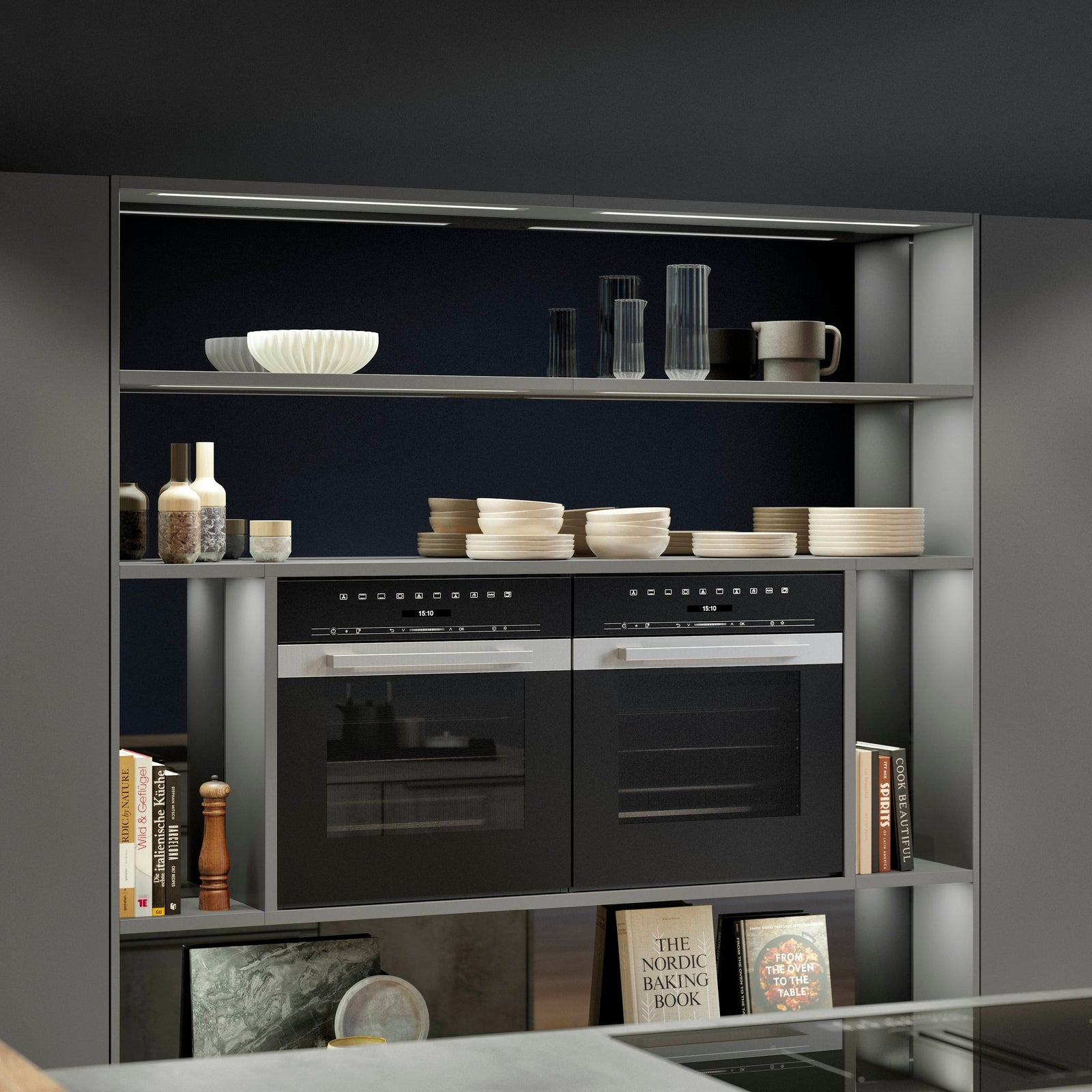
Moderne Küchen verlangen einfache Wartung und vielseitige Küchengeräte. Nobilia präsentiert 2026 mit dem BORA GPNext und exklusiven Electrolux-Neuheiten technische Erweiterungen für das mittlere Segment. Diese Innovationen beschleunigen den Filterwechsel und bieten Planern eine zentrale Lösung, ein Highlight unter den Küchentrends 2026.
View full article

Effektive Raumnutzung und Beleuchtungskonzepte in der modernen Küche
Viele Küchen leiden unter ungenutztem Stauraum und fehlender Beleuchtung in der Küche. Praxisorientierte Konzepte ermöglichen optimale Raumnutzung und funktionale, stimmungsvolle Küchenbeleuchtung. Tipps reichen von deckenhohen Schränken bis zu smarten Lichtkonzepten für perfektes Licht und maximale Funktion.
View full article

Farbtrends in der Küche: So schaffen Sie Ruhe und Natürlichkeit
Sterile Küchen wirken unpersönlich und kalt. Sanfte Erdtöne als Wandfarbe in der Küche schaffen eine warme, natürliche Atmosphäre. Küchentrends 2025 zeigen, wie Sie Ruhe und Geborgenheit erreichen.
View full article

Natursteinoberflächen reinigen und pflegen
Wussten Sie, dass unsachgemäße Pflege die Lebensdauer Ihrer Küchenarbeitsplatte aus Naturstein um bis zu 50 % verkürzen kann? Mit jahrelanger Erfahrung in Küchenmöbeln und Natursteinflächen liefere ich klare Tipps zur Reinigung, Imprägnierung und Fleckenschutz. So bleibt Ihre Arbeitsplatte makellos und langlebig.
View full article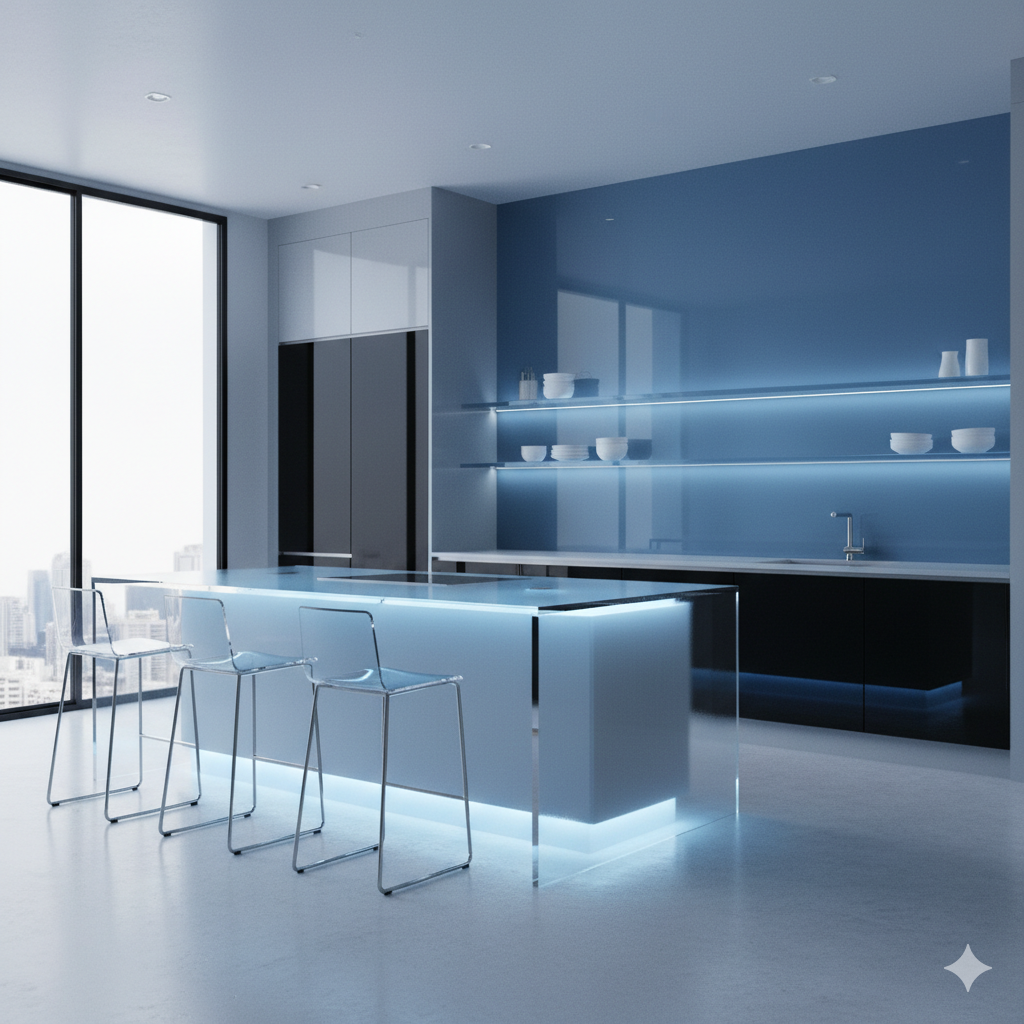

Polymerglas in Küche und Wohnraum
Falsche Reinigung kann Polymerglas in Ihrer Küche dauerhaft schädigen. Optimierte Pflegehinweise für Smartglas verhindern Trübungen und Spannungsrisse. Praxisnahe Tipps sorgen für schonende Reinigung und langfristige Werterhaltung Ihrer Küchenfronten.
View full article

Reinigung und Pflege von Kühlschrank und Geschirrspüler
Kühlschrank und Geschirrspüler leiden unter verstopften Kondenswasserabläufen und verschmutzten Dichtungen. Als Profi für Küchengerätewartung zeige ich praxisnahe Tipps für kühlschrank richtig reinigen, Geschirrspülerpflege und effektive Filterkontrolle. So vermeiden Sie Schimmel, senken den Energieverbrauch und verlängern die Lebensdauer Ihrer Geräte.
View full article Gerätetechnische Erweiterungen im Nobilia-Portfolio 2026
Moderne Küchen verlangen einfache Wartung und vielseitige Küchengeräte. Nobilia präsentiert 2026 mit dem BORA GPNext und exklusiven Electrolux-Neuheiten technische Erweiterungen für das mittlere Segment. Diese Innovationen beschleunigen den Filterwechsel und bieten Planern eine zentrale Lösung, ein Highlight unter den Küchentrends 2026.
View full article Effektive Raumnutzung und Beleuchtungskonzepte in der modernen Küche
Viele Küchen leiden unter ungenutztem Stauraum und fehlender Beleuchtung in der Küche. Praxisorientierte Konzepte ermöglichen optimale Raumnutzung und funktionale, stimmungsvolle Küchenbeleuchtung. Tipps reichen von deckenhohen Schränken bis zu smarten Lichtkonzepten für perfektes Licht und maximale Funktion.
View full article Farbtrends in der Küche: So schaffen Sie Ruhe und Natürlichkeit
Sterile Küchen wirken unpersönlich und kalt. Sanfte Erdtöne als Wandfarbe in der Küche schaffen eine warme, natürliche Atmosphäre. Küchentrends 2025 zeigen, wie Sie Ruhe und Geborgenheit erreichen.
View full article