Your cart is empty






Küche





3D ONLINE KÜCHENPLANER






Wood, lacquer or concrete? Which material is right for your kitchen
Once the layout of a kitchen is determined, the choice of materials significantly defines the character, feel, durability, and maintenance effort. This decision is a balance of aesthetics, budget, and daily use requirements. This guide provides a technical overview of common material types, analyzes the differences between authentic materials and their alternatives, and offers recommendations for various usage profiles.
1. The kitchen made of wood: Solid, veneered, and decorative
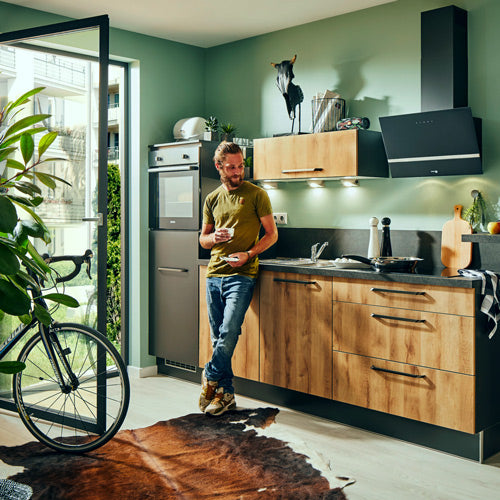
Wood surfaces give a kitchen a warm and cozy atmosphere. However, there are significant constructive, qualitative, and price differences.

Solid wood
- Description: Fronts or countertops consist of continuous, solid wood.
- Advantages: Extremely durable, robust, and repairable. Scratches and dents can be sanded out. Open-pored oiled surfaces can positively contribute to the room climate.
- Disadvantages: Highest price range. High maintenance effort for oiled surfaces (regular re-oiling required). As a natural material, solid wood reacts to fluctuations in humidity and temperature with swelling and shrinking (risk of warping).
- Suitability: For purist concepts with a high budget and willingness for regular maintenance.
Real wood veneer
- Description: A thin layer of real wood (veneer, usually 0.5 to 1 mm thick) is applied to a dimensionally stable substrate panel (MDF or chipboard).
- Advantages: Appearance and feel are almost identical to solid wood. Significantly more affordable and dimensionally stable (lower risk of warping).
- Disadvantages: Deeper damages that reach through the veneer to the substrate panel are difficult or impossible to repair.
- Suitability: The best compromise between authenticity and everyday practicality for a real wood kitchen.
Wood decor (reproduction)
-
Description: The wood look is applied to a substrate panel using a plastic coating. There are quality differences here:
- Simple foil/decor paper: The cheapest variant with low resistance.
- Melamine resin coating: The standard for robust and easy-care surfaces.
- Laminate (HPL): The most durable variant, very scratch and abrasion resistant.
- Quality feature "synchronized pore": In high-quality decors, the tactile surface structure exactly follows the visible wood grain, creating a very authentic feel.
- Advantages: Extremely easy to care for, scratch-resistant, moisture-resistant, and by far the most affordable option.
- Disadvantages: It is a reproduction without the unique tactile feel and value of real wood.
- Suitability: Ideal for intensive family everyday life and budget-oriented planning.
2. The kitchen front made of paint: real paint, lacquer laminate, and foil
Smooth, often glossy surfaces characterize modern kitchen designs. The quality and durability depend directly on the manufacturing process.

Real paint
- Description: In a multi-step process, several layers of paint are applied to a substrate panel (usually MDF), sanded in between, and polished. Different types of paint (e.g., UV paint, water-based paint) and gloss levels (from ultra-matte to high gloss) are distinguished.
- Advantages: Offers unparalleled optical depth effect and color brilliance. Enables a seamless look as the edges are also painted.
- Disadvantages: Highest price category. High sensitivity to scratches, especially on high-gloss surfaces. Repairs are elaborate.
- Quality feature "Anti Fingerprint": Especially with matte, dark lacquers, a special surface coating reduces the visibility of fingerprints.
- Suitability: For design-oriented kitchens with lower mechanical stress and a high budget.
Lacquer laminate and acrylic fronts
- Description: These are the technologically most advanced alternatives to real lacquer. In lacquer laminate, an industrially lacquered, multi-layer PET foil is laminated onto a carrier board. In acrylic fronts, an approx. 1 mm thick, dyed acrylic layer is applied.
- Advantages: Offer an appearance very close to real lacquer. However, they are significantly more robust, scratch-resistant, and easier to maintain at a lower price. Light scratches on acrylic fronts can be removed with special polishing pastes.
- Disadvantages: Do not achieve the absolutely perfect, mirror-like brilliance of real, polished lacquer.
- Suitability: The most rational choice for a high-quality high-gloss kitchen in daily use.
Foil front (high gloss)
- Description: A thin, glossy plastic foil is applied to the carrier board.
- Advantages: The lowest price.
- Disadvantages: Lower durability. The foil can peel off at the edges after years, especially near heat sources (oven, dishwasher). The surface is softer and more prone to scratches.
- Suitability: For price-sensitive entry-level solutions.
Care tip for all glossy fronts: Do not use microfiber cloths. These can contain fine abrasive particles and over time cause a network of fine hairline scratches. Soft cotton cloths are the better choice.
3. Kitchen fronts made of concrete: Real concrete vs. concrete look
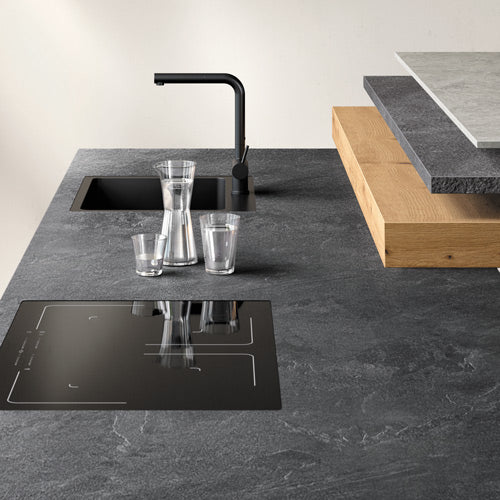
Concrete in the kitchen creates a purist, urban aesthetic.

Real concrete
- Description: A thin layer (a few millimeters) of real fine concrete is hand-applied to a carrier board. Each front or countertop is unique.
- Advantages: Authentic, unique tactile and visual feel.
- Disadvantages: Extremely high weight, which places special demands on the carcass construction, fittings, and floor statics. The surface is naturally open-pored and must be carefully sealed with an epoxy resin or wax impregnation and regularly maintained to protect it from stains caused by oil, wine, or acid. Additionally, a very expensive option.
- Suitability: For architecturally demanding projects where the authenticity of the material is paramount.
Concrete look (replica)
- Description: The aesthetics of concrete are replicated on easy-care carrier boards. Common materials are robust laminate or special quartz-containing resin-based fillers that create a textured surface.
- Advantages: Significantly lighter and cheaper than real concrete. The surface is closed and pore-free, making it extremely easy to care for and resistant to stains.
- Disadvantages: It is a replica and does not have the authentic, cool tactile feel of real concrete.
- Suitability: The practical and easy-care alternative for the urban style.
Combination tip: Concrete often feels cool. It unfolds its full potential in combination with warm materials like wood (e.g. oak) to create a cozy atmosphere.
4. Other high-quality material worlds
- Ceramics: Extremely hard, scratch-resistant, heat-resistant, and pore-free. Used for worktops and increasingly also for fronts (on lightweight carrier frames). Very easy to care for, but also very expensive and brittle (risk of breakage at edges).
- Glass: For fronts (back-painted) or niche claddings. Hygienic and easy to care for, but prone to fingerprints.
- Nanotech materials (e.g. Fenix): Innovative, ultra-matte surfaces with anti-fingerprint properties. Superficial micro-scratches can be thermally repaired.
5. Conclusion: Recommendations by usage profile
- For intense family everyday life: Robust and easy-care materials are crucial. Recommended are fronts made of laminate or melamine resin and worktops made of laminate or quartz composite.
- For the design-oriented household: Aesthetics and tactile feel are paramount. Real wood veneer or matte real lacquer fronts are a good choice. For high gloss, lacquer laminate or acrylic offer the best balance of appearance and durability.
- For the purist: Materials like ceramics, glass or concrete look emphasize a minimalist style. Real concrete is an option for uncompromising, authentic designs with a high budget.
Understanding the technical differences between the original material and its high-quality, often more practical everyday alternatives is the key to an informed decision.
View full article

Gerätetechnische Erweiterungen im Nobilia-Portfolio 2026
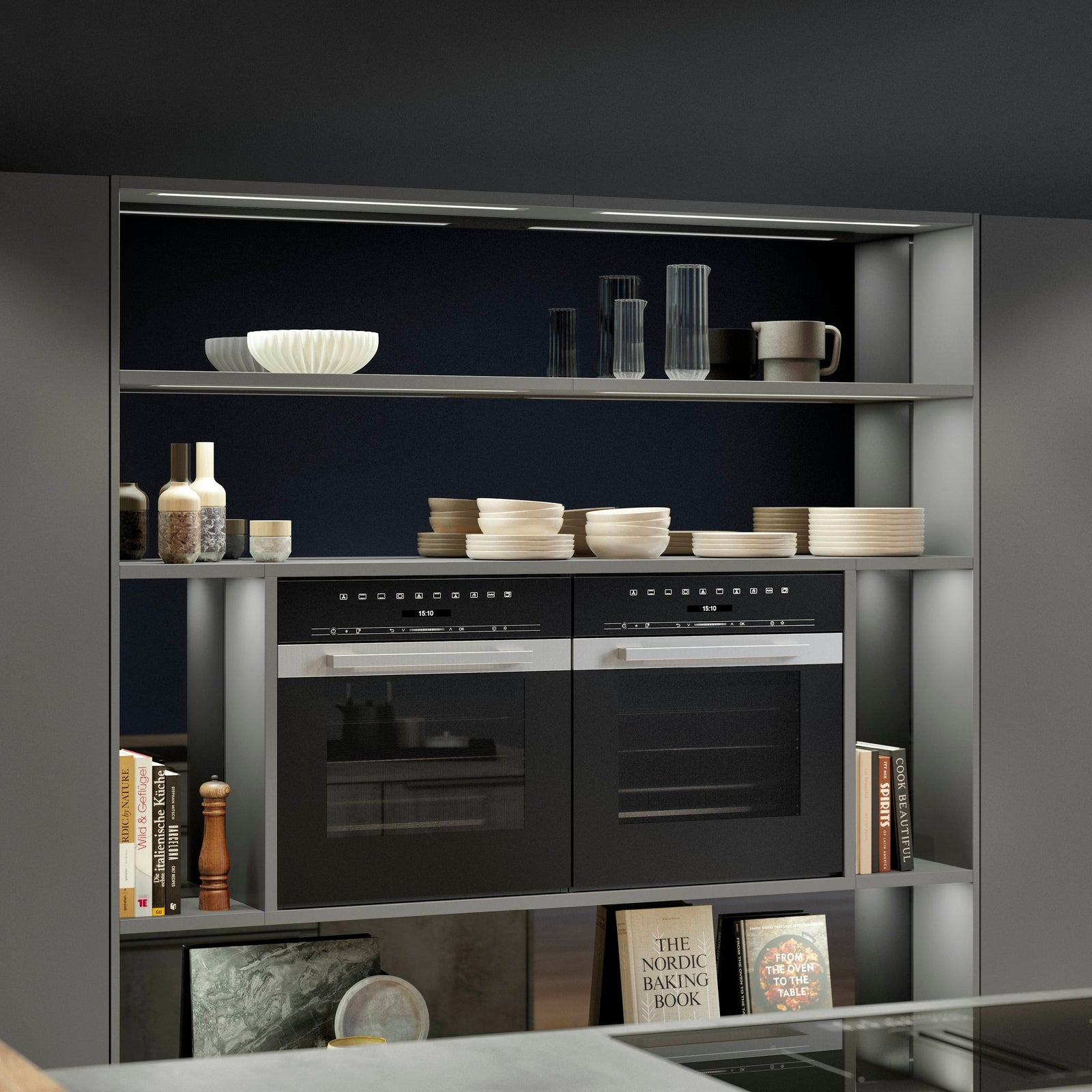
Moderne Küchen verlangen einfache Wartung und vielseitige Küchengeräte. Nobilia präsentiert 2026 mit dem BORA GPNext und exklusiven Electrolux-Neuheiten technische Erweiterungen für das mittlere Segment. Diese Innovationen beschleunigen den Filterwechsel und bieten Planern eine zentrale Lösung, ein Highlight unter den Küchentrends 2026.
View full article

Effektive Raumnutzung und Beleuchtungskonzepte in der modernen Küche
Viele Küchen leiden unter ungenutztem Stauraum und fehlender Beleuchtung in der Küche. Praxisorientierte Konzepte ermöglichen optimale Raumnutzung und funktionale, stimmungsvolle Küchenbeleuchtung. Tipps reichen von deckenhohen Schränken bis zu smarten Lichtkonzepten für perfektes Licht und maximale Funktion.
View full article

Farbtrends in der Küche: So schaffen Sie Ruhe und Natürlichkeit
Sterile Küchen wirken unpersönlich und kalt. Sanfte Erdtöne als Wandfarbe in der Küche schaffen eine warme, natürliche Atmosphäre. Küchentrends 2025 zeigen, wie Sie Ruhe und Geborgenheit erreichen.
View full article

Natursteinoberflächen reinigen und pflegen
Wussten Sie, dass unsachgemäße Pflege die Lebensdauer Ihrer Küchenarbeitsplatte aus Naturstein um bis zu 50 % verkürzen kann? Mit jahrelanger Erfahrung in Küchenmöbeln und Natursteinflächen liefere ich klare Tipps zur Reinigung, Imprägnierung und Fleckenschutz. So bleibt Ihre Arbeitsplatte makellos und langlebig.
View full article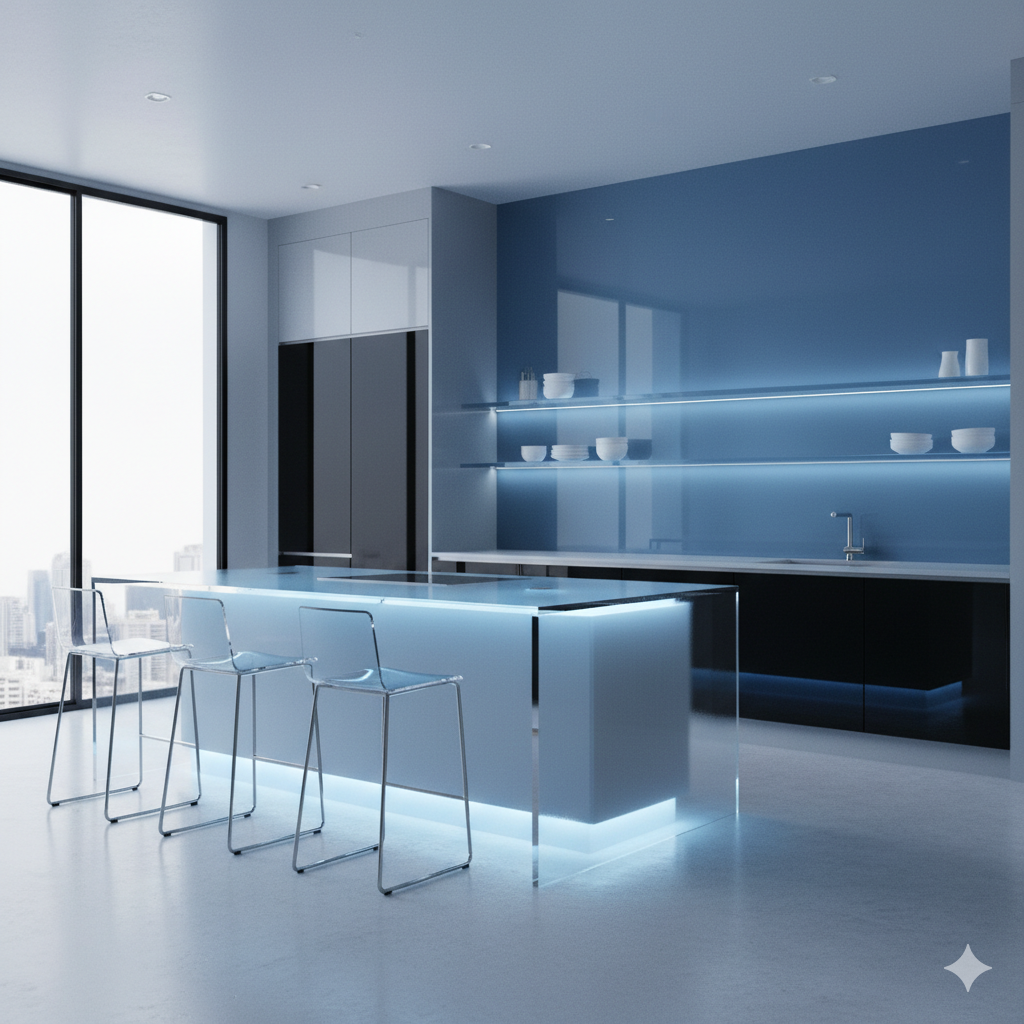

Polymerglas in Küche und Wohnraum
Falsche Reinigung kann Polymerglas in Ihrer Küche dauerhaft schädigen. Optimierte Pflegehinweise für Smartglas verhindern Trübungen und Spannungsrisse. Praxisnahe Tipps sorgen für schonende Reinigung und langfristige Werterhaltung Ihrer Küchenfronten.
View full article

Reinigung und Pflege von Kühlschrank und Geschirrspüler
Kühlschrank und Geschirrspüler leiden unter verstopften Kondenswasserabläufen und verschmutzten Dichtungen. Als Profi für Küchengerätewartung zeige ich praxisnahe Tipps für kühlschrank richtig reinigen, Geschirrspülerpflege und effektive Filterkontrolle. So vermeiden Sie Schimmel, senken den Energieverbrauch und verlängern die Lebensdauer Ihrer Geräte.
View full article Gerätetechnische Erweiterungen im Nobilia-Portfolio 2026
Moderne Küchen verlangen einfache Wartung und vielseitige Küchengeräte. Nobilia präsentiert 2026 mit dem BORA GPNext und exklusiven Electrolux-Neuheiten technische Erweiterungen für das mittlere Segment. Diese Innovationen beschleunigen den Filterwechsel und bieten Planern eine zentrale Lösung, ein Highlight unter den Küchentrends 2026.
View full article Effektive Raumnutzung und Beleuchtungskonzepte in der modernen Küche
Viele Küchen leiden unter ungenutztem Stauraum und fehlender Beleuchtung in der Küche. Praxisorientierte Konzepte ermöglichen optimale Raumnutzung und funktionale, stimmungsvolle Küchenbeleuchtung. Tipps reichen von deckenhohen Schränken bis zu smarten Lichtkonzepten für perfektes Licht und maximale Funktion.
View full article Farbtrends in der Küche: So schaffen Sie Ruhe und Natürlichkeit
Sterile Küchen wirken unpersönlich und kalt. Sanfte Erdtöne als Wandfarbe in der Küche schaffen eine warme, natürliche Atmosphäre. Küchentrends 2025 zeigen, wie Sie Ruhe und Geborgenheit erreichen.
View full article