Your cart is empty






Küche





3D ONLINE KÜCHENPLANER






More space, less chaos: How to plan the perfect storage for your kitchen
The functionality of a kitchen is measured less by its square footage and more by the efficiency and intelligence of its storage planning. A logical and ergonomic organization of storage space is the foundation for effortless, safe, and quick workflows. While aesthetic aspects like fronts and colors shape the first impression, it is the internal organization that determines daily satisfaction with the kitchen. Modern kitchen design today offers highly thoughtful, ergonomic cabinet systems designed to create order and make everyday life easier. This guide analyzes the key concepts of modern storage planning.

1. Kitchen Cabinets: Basic Cabinet Types and Their Function
The base cabinet: The most intensively used area. Consistent planning with full extension drawers instead of doors with shelves is the most important ergonomic decision. Full extension drawers bring the entire contents out of the cabinet and provide a complete overview from above, making constant bending and clearing out front items unnecessary.
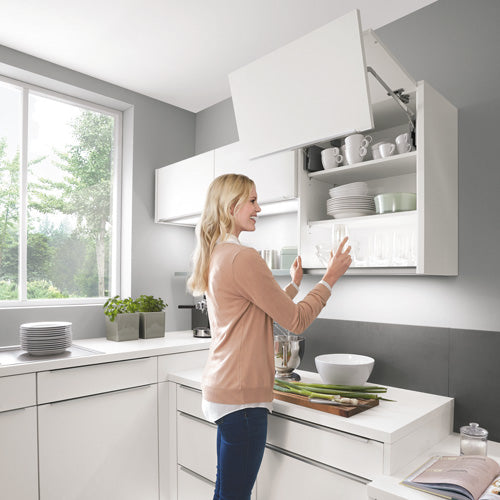
The wall cabinet: Primarily serves for quick access to daily used, lighter items like glasses, cups, and plates. Modern flap fittings that open the front upwards offer better ergonomics and more safety than classic hinged doors, as they do not restrict head clearance.
The tall cabinet: Utilizes the full room height and serves either for ergonomic installation of appliances at eye level or as a central pantry cabinet.
The corner cabinet: Using corners in L- or U-shaped kitchens requires special mechanical solutions. Common are swivel pull-outs, where kidney-shaped trays swing out of the cabinet, or carousel shelves. These systems make the hard-to-reach space usable but come with significant additional costs. A pragmatic alternative can be the "dead corner", where the corner area remains unused, allowing for wider and better usable cabinets on the adjacent sides.

2. Storage: Systems for the pantry cabinet in detailed comparison
The tall cabinet for storage is a central element of kitchen organization. The choice of system has a major impact on clarity, ergonomics, and efficiency when storing food in your kitchen cabinet.
1. The Cabinet with Shelves
- Description: A tall cabinet with a normal hinged door and fixed shelves.
- Advantages: The most cost-effective and structurally simplest variant.
- Disadvantages: This solution is the most confusing and least ergonomic. To reach supplies at the back, you have to clear out the front ones. This leads to a lack of overview, duplicate purchases, and food waste. The usable depth is severely limited in practice.
2. The Apothecary Cabinet
- Description: A narrow, tall cabinet where the entire shelving system is firmly connected to the front and pulled out all at once.
- Advantages: Provides a quick overview and side access to the entire contents with just one single movement. You immediately see what is available.
-
Disadvantages:
- High pull-out weight: The biggest disadvantage is the enormous weight. Every time you open it, you move the entire weight of glasses, canned goods, and bottles, which can quickly be 50 kg or more. This strains the mechanics and requires a lot of effort to open and close.
- Mechanical stress: The high weight and long lever arm heavily stress the lower guide rails, which can lead to instability and wear over time.
- Inefficient use of space: The side suspension of the shelving system significantly reduces the usable internal width of the cabinet. Valuable storage space is lost.
3. The tall cabinet with inner drawers
- Description: Behind one or two normal cabinet doors (hinged doors or one large handleless front) are several individually pull-out inner drawers.
-
Advantages:
- Flexible and easy access: Only the one drawer with the required contents is pulled out at a time. The weight to be moved is low. Access is conveniently possible from three sides (left, right, and front).
- Efficient use of space: Since no bulky side mechanism is required, the full cabinet width can be used. This creates significantly more usable storage space at the same external size than with the apothecary cabinet.
- Good overview: Each drawer is fully visible from above.
- High load capacity: Each individual drawer is highly load-bearing (depending on fittings up to 70 kg). Heavy bottles or canned goods can also be stored securely.
- Planning freedom: The concept is flexible in height, width, and depth and can be precisely adapted to individual needs.
- Disadvantages: Access requires two movements: first the cabinet door must be opened, then the drawer pulled out. This is the most costly variant of the three cabinet systems presented.
3. Additional storage concepts in the kitchen
The walk-in pantry: A highly efficient alternative to the storage cabinet, provided the floor plan allows it.
- Concept: A corner or niche is converted into a small walk-in room with shallow shelving systems (approx. 30 cm deep).
- Advantages: Offers the best possible overview of all supplies. The cost of the shelves is often lower than for a complex cabinet mechanism. Ventilation is often better, which extends the shelf life of foods like onions or potatoes.
- Disadvantages: Requires a suitable floor plan and takes up a relatively large footprint in the kitchen.
- Storage in the base cabinet: Deep and wide full-extension drawers in the base cabinet can also be used very effectively for storing supplies. They are ergonomically very accessible and often a more cost-effective and flexible alternative to tall cabinets.

4. Systems for complete integration ("Pocket Systems")
In open-plan kitchens, there is often a desire to make functional areas invisible when not in use to create a calm, homely atmosphere. So-called pocket systems offer a technically sophisticated solution here.
- Concept and technology: These are large, often floor-to-ceiling doors that do not open to the side like normal hinged doors but slide into a narrow niche (the "pocket") on the side of the cabinet carcass and disappear there when opened.
-
Applications: This technology allows entire functional areas to be completely hidden when not in use.
- The breakfast or coffee bar: After breakfast, the doors are closed, and the kitchen immediately looks tidy.
- The home office: The entire workspace can disappear into a tall cabinet.
- The complete kitchen row: In loft concepts, even an entire functional kitchen row can be hidden behind pocket doors.
-
Disadvantages and considerations:
- Costs: Pocket systems are technically very complex and are among the most expensive fitting solutions on the market.
- Loss of space: The "pocket" in which the door disappears reduces the usable storage space inside the cabinet by about 10 to 15 cm in width.
- Complex installation: The installation requires the highest precision and should only be carried out by experienced installers to ensure permanently smooth operation.
5. Conclusion: Key questions for needs-based planning
Modern storage is an intelligent system designed to make everyday life more comfortable, ergonomic, and stress-free. When planning your kitchen, you should critically weigh the different systems instead of being guided solely by aesthetic decisions.
The following questions can help with the decision:
- Ergonomics and access: How important is access to supplies with just one movement (advantage of pull-out cabinet) compared to better overview, higher load capacity, and space utilization of internal extensions (with two movements)?
- Type of stored goods: Do I mainly store heavy bottles and canned goods (requires high load capacity of the extensions) or light packaging?
- Budget: Does the significant surcharge for complex mechanics (corner cabinet, pull-out cabinet, pocket doors) fit into my budget, or would I rather invest the money in more and higher-quality standard full extensions?
- Floor plan: Does my room offer the possibility for a walk-in pantry, which often represents a more cost-effective and clearer alternative to expensive storage cabinets?
- Aesthetics vs. Function: Am I willing to pay a high price and accept a loss of usable storage space for an absolutely tidy look (pocket doors)?
A well-thought-out storage plan is the invisible foundation of a kitchen that brings joy for many years. It saves time in daily work, reduces food waste through better overview, and brings a noticeable calm and control to everyday kitchen life.
View full article
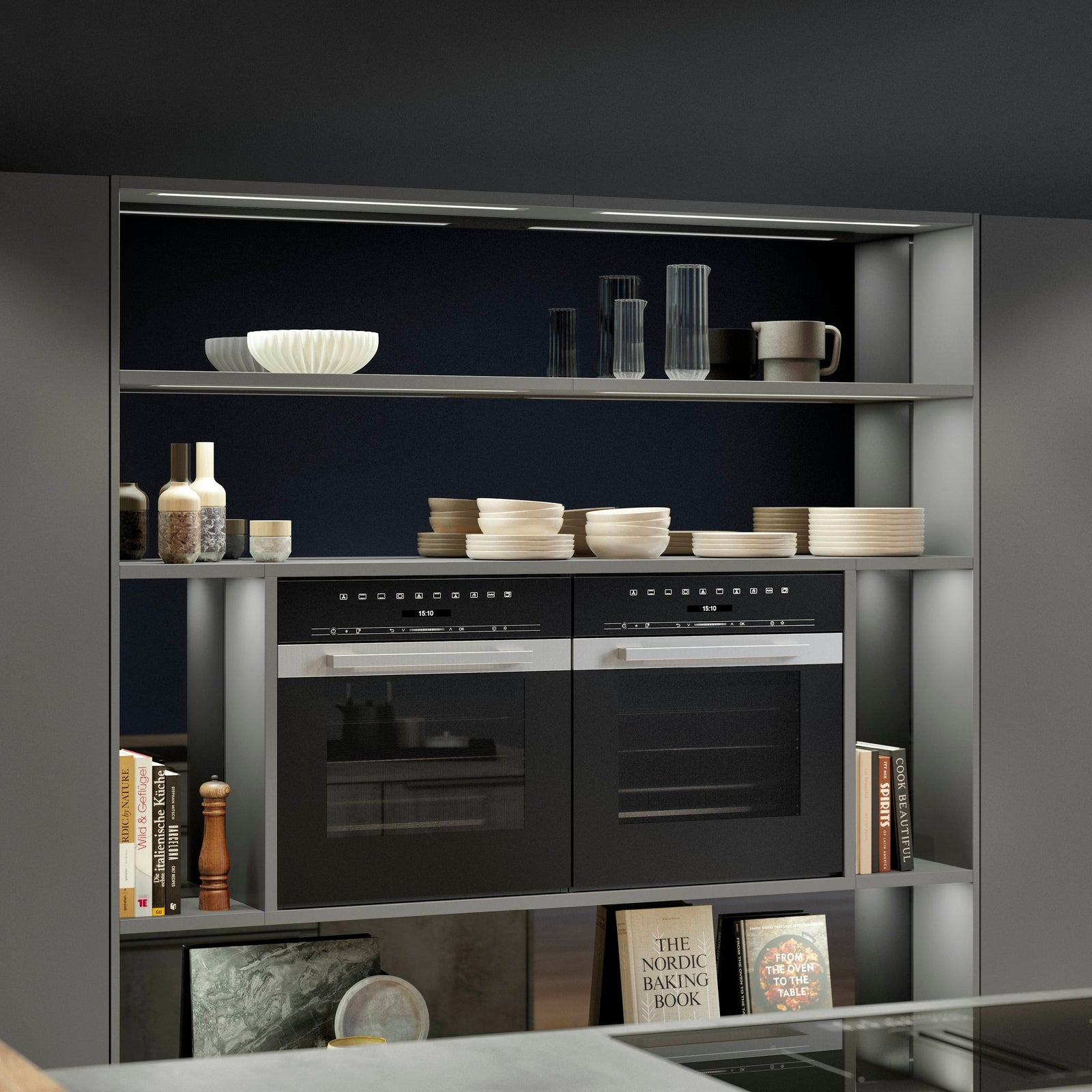

Gerätetechnische Erweiterungen im Nobilia-Portfolio 2026
Moderne Küchen verlangen einfache Wartung und vielseitige Küchengeräte. Nobilia präsentiert 2026 mit dem BORA GPNext und exklusiven Electrolux-Neuheiten technische Erweiterungen für das mittlere Segment. Diese Innovationen beschleunigen den Filterwechsel und bieten Planern eine zentrale Lösung, ein Highlight unter den Küchentrends 2026.
View full article

Effektive Raumnutzung und Beleuchtungskonzepte in der modernen Küche
Viele Küchen leiden unter ungenutztem Stauraum und fehlender Beleuchtung in der Küche. Praxisorientierte Konzepte ermöglichen optimale Raumnutzung und funktionale, stimmungsvolle Küchenbeleuchtung. Tipps reichen von deckenhohen Schränken bis zu smarten Lichtkonzepten für perfektes Licht und maximale Funktion.
View full article

Farbtrends in der Küche: So schaffen Sie Ruhe und Natürlichkeit
Sterile Küchen wirken unpersönlich und kalt. Sanfte Erdtöne als Wandfarbe in der Küche schaffen eine warme, natürliche Atmosphäre. Küchentrends 2025 zeigen, wie Sie Ruhe und Geborgenheit erreichen.
View full article

Natursteinoberflächen reinigen und pflegen
Wussten Sie, dass unsachgemäße Pflege die Lebensdauer Ihrer Küchenarbeitsplatte aus Naturstein um bis zu 50 % verkürzen kann? Mit jahrelanger Erfahrung in Küchenmöbeln und Natursteinflächen liefere ich klare Tipps zur Reinigung, Imprägnierung und Fleckenschutz. So bleibt Ihre Arbeitsplatte makellos und langlebig.
View full article

Polymerglas in Küche und Wohnraum
Falsche Reinigung kann Polymerglas in Ihrer Küche dauerhaft schädigen. Optimierte Pflegehinweise für Smartglas verhindern Trübungen und Spannungsrisse. Praxisnahe Tipps sorgen für schonende Reinigung und langfristige Werterhaltung Ihrer Küchenfronten.
View full article

Reinigung und Pflege von Kühlschrank und Geschirrspüler
Kühlschrank und Geschirrspüler leiden unter verstopften Kondenswasserabläufen und verschmutzten Dichtungen. Als Profi für Küchengerätewartung zeige ich praxisnahe Tipps für kühlschrank richtig reinigen, Geschirrspülerpflege und effektive Filterkontrolle. So vermeiden Sie Schimmel, senken den Energieverbrauch und verlängern die Lebensdauer Ihrer Geräte.
View full article Gerätetechnische Erweiterungen im Nobilia-Portfolio 2026
Moderne Küchen verlangen einfache Wartung und vielseitige Küchengeräte. Nobilia präsentiert 2026 mit dem BORA GPNext und exklusiven Electrolux-Neuheiten technische Erweiterungen für das mittlere Segment. Diese Innovationen beschleunigen den Filterwechsel und bieten Planern eine zentrale Lösung, ein Highlight unter den Küchentrends 2026.
View full article Effektive Raumnutzung und Beleuchtungskonzepte in der modernen Küche
Viele Küchen leiden unter ungenutztem Stauraum und fehlender Beleuchtung in der Küche. Praxisorientierte Konzepte ermöglichen optimale Raumnutzung und funktionale, stimmungsvolle Küchenbeleuchtung. Tipps reichen von deckenhohen Schränken bis zu smarten Lichtkonzepten für perfektes Licht und maximale Funktion.
View full article Farbtrends in der Küche: So schaffen Sie Ruhe und Natürlichkeit
Sterile Küchen wirken unpersönlich und kalt. Sanfte Erdtöne als Wandfarbe in der Küche schaffen eine warme, natürliche Atmosphäre. Küchentrends 2025 zeigen, wie Sie Ruhe und Geborgenheit erreichen.
View full article