Your cart is empty






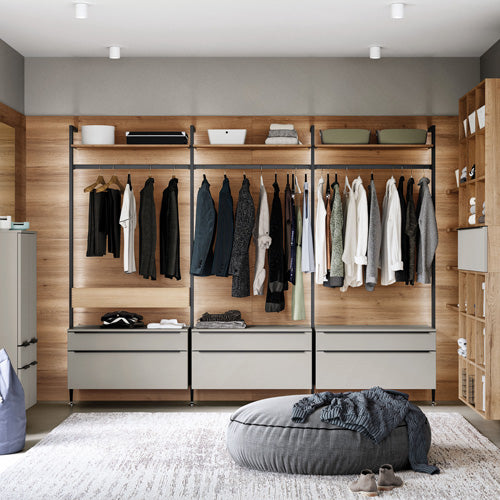
Küche

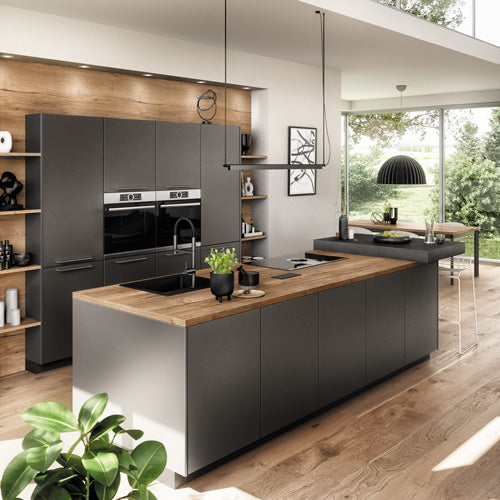

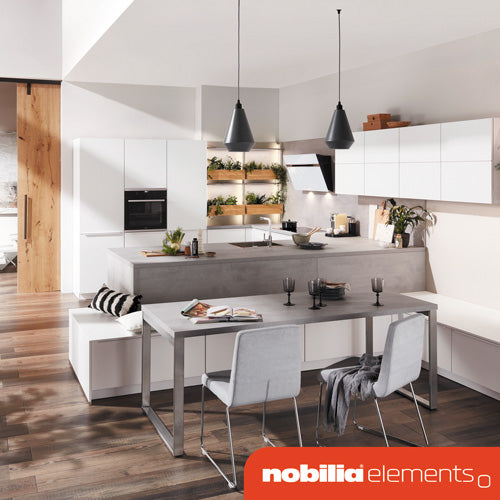

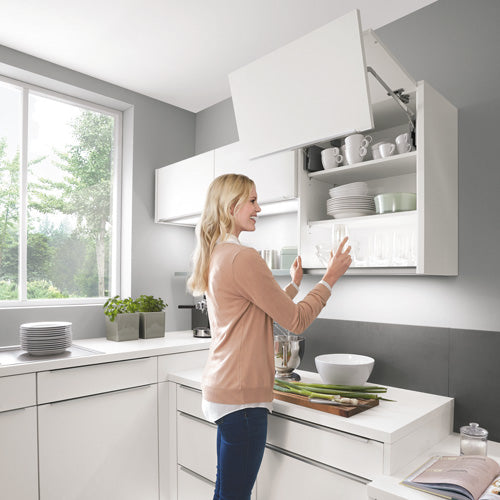


PROFESSIONELLER 3D NOBILIA KÜCHENPLANER - Desktop


ONLINE KITCHEN PLANNING WITH PRICES - configure today / pick up tomorrow
INTUITIVE & SCHNELLE KÜCHENPLANUNG - Auf allen Geräten





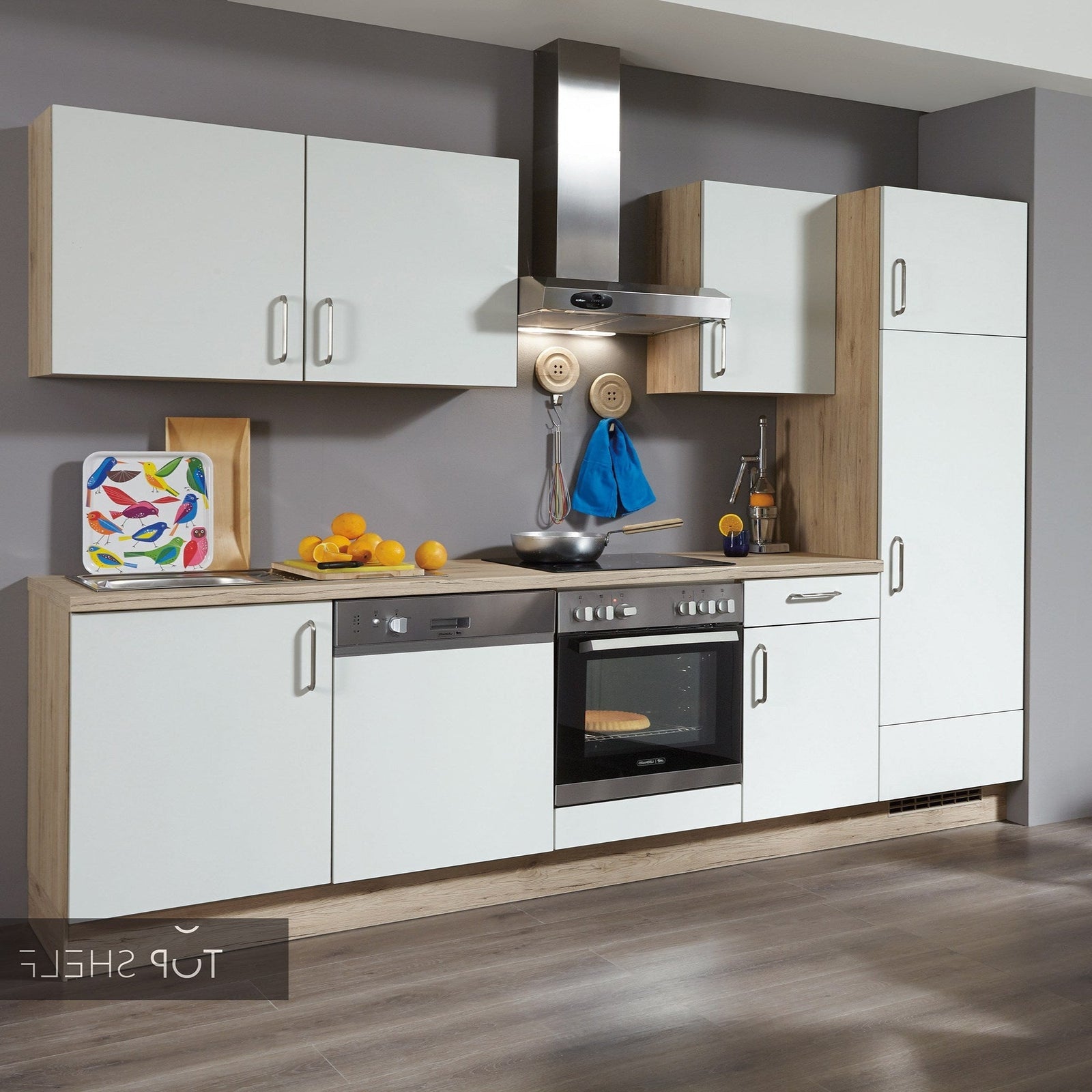

Small kitchen, big impact: How to get the most out of limited space
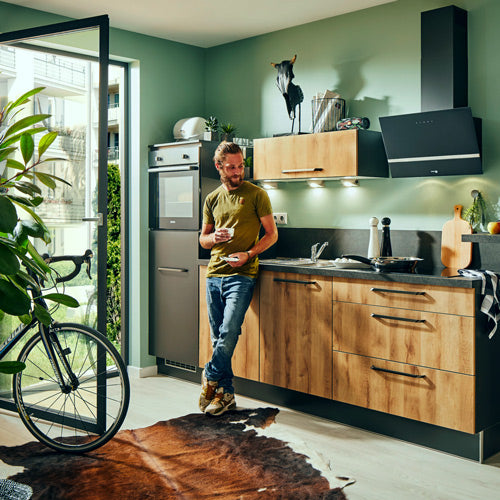
Kitchen planning in a spatially limited environment presents a special challenge. It is not to be understood as a compromise but requires highly intelligent and efficient planning to optimally exploit the available potential and make the space appear larger. Success is not measured by the square meter count but by the thoughtful arrangement, maximum storage utilization, and clever application of design principles. A carefully designed small kitchen can certainly compete in functionality, ergonomics, and livability with more generous designs.
The key to success lies in a strategic approach. It is about making conscious decisions and investing specifically where they bring the greatest daily benefit. This guide presents the most proven strategies and solutions to realize maximum functionality and appealing aesthetics in minimal space.

1. The Foundation: Priorities for Planning Small Kitchens, e.g. Storage
In small kitchens, the budget is often as limited as the space. Sensible planning focuses investment on elements that offer the greatest functional added value rather than integrating many expensive but less effective special solutions.
Priority 1: Drawers instead of doors in the base cabinet: The most important investment for daily comfort is the consistent use of full-extension drawers instead of doors with shelves. The ergonomic advantage is immense: instead of having to bend deeply to reach the back of a cabinet, the entire contents slide comfortably towards the user. This not only allows access in an upright posture, which protects the back, but also provides a perfect overview of the entire contents from above. This avoids double purchases because supplies are no longer overlooked. This fundamental decision influences the usability of the kitchen every day and should therefore have the highest priority.
Priority 2: A continuous work surface: A continuous, free work surface between the sink and cooktop is the primary preparation zone and thus the functional heart of the kitchen. Over 70 percent of all activities take place here, from cutting vegetables to plating dishes. Plans that maximize this surface and allow an uninterrupted length of at least 60 cm, ideally 80 to 90 cm, should be absolutely preferred. Any interruption by tall appliances or unfavorably placed elements significantly reduces efficiency.
Priority 3: Good task lighting: Good, shadow-free lighting of the work area is essential for safety and usability. In small kitchens, wall cabinets or the user often cast shadows on the countertop. Targeted task lighting, usually in the form of LED light strips under the wall cabinets, is therefore not a triviality but a necessity. It ensures safety when handling knives and allows correct assessment of the color and doneness of food.
Secondary investments and their consideration: Expensive mechanical solutions for corners, special compact appliances, or plinth drawers are often costly. Their benefit should be critically weighed against the costs. A corner cabinet with elaborate swivel mechanics can cost as much as several meters of high-quality full-extension drawers. Here one must ask whether the hard-to-reach space in the corner justifies the extra cost or whether it is better to invest the budget in optimizing the more easily accessible areas. Cooktops with integrated downdraft ventilation create headroom but occupy valuable storage space in the cabinet below, a resource that is scarce in small kitchens.
2. Floor Plan Solutions for Small Spaces
The choice of floor plan is determined by the room geometry. For small kitchens, two layouts have become established above all.
The kitchen line (single-line kitchen) The linear arrangement of all elements on one wall is the most space-saving solution and often the only option in very narrow rooms, for example in galley kitchens or studio apartments. For a functional arrangement, the workflow should be considered. A logical sequence is refrigerator, followed by a small storage area, then the sink (as the main preparation zone), a sufficiently large work surface, and finally the cooktop. For such a line to be truly usable, it should not be shorter than about 3 meters.
The two-line kitchen (galley) With a room width of at least 2.40 meters, a two-line arrangement often represents the ergonomically superior alternative. It allows a clear separation of work areas, for example a "wet" side with sink and dishwasher and a "hot" side with cooktop and oven. This leads to very short, efficient paths and makes this arrangement one of the most powerful for a single person. A distance of at least 1.20 meters between the lines is mandatory to allow unrestricted freedom of movement and simultaneous opening of opposite drawers.

3. Strategies for Functional and Visual Optimization of Your Kitchen Planning
Visual space enlargement
- Colors: Light colors such as white, cream, or light gray reflect light and create a more open, airy atmosphere. A tone-on-tone design, where fronts, countertops, and walls are kept in a similar color palette, avoids harsh contrasts and creates a calm, spacious overall impression.
- Surfaces: Glossy surfaces on the fronts (lacquer, glass, acrylic) can enhance this effect through reflections but are more prone to fingerprints, which can increase cleaning effort. Matte surfaces appear more modern and are easier to maintain but can absorb light more strongly. A compromise is satin-matte surfaces.
- Front design: Handleless fronts with integrated grip rails or push-to-open mechanisms create a calm, continuous surface that makes the space appear larger and tidier.
-
Use of room height Tall cabinets that reach up to the ceiling maximize storage space. However, keep in mind that the uppermost compartments are only accessible with a step ladder. They are therefore only suitable for rarely used items such as a fondue set or seasonal decorations. Narrow pull-out pantry cabinets can utilize niches from 15 cm width but are mechanically complex and therefore expensive.
Intelligent cabinet equipment
- Corner solutions: In small L-shaped kitchens, using the corner is a matter of trade-off. A pragmatic and often budget-friendly alternative to expensive mechanical systems is the "dead corner." Here, the corner area is not used, but this allows for wider and thus better usable cabinets on the adjacent sides.
-
Plinth drawers: The space in the plinth area can be used by shallow drawers for baking sheets or other flat items. However, this is a costly special custom solution.
Multifunctional and compact appliances
- Compact appliances: A 45 cm wide dishwasher or a compact oven (45 cm high) saves valuable space. However, this comes with reduced capacity, which must fit the respective household.
- Combination appliances: An oven with integrated microwave function saves space for a second, separate appliance.
- Cooktops with integrated downdraft ventilation (downdraft extractor): This solution makes an overhead extractor hood unnecessary, contributing to a more open feeling of space and freeing up space in the wall cabinet.
4. Creative and Budget-Friendly Alternatives
- Open shelves instead of wall cabinets: Instead of closed wall cabinets, open shelves can visually loosen a wall and make the space feel airier. They are more cost-effective but require more tidiness and are more maintenance-intensive as they attract dust.
- Niche systems: Rail systems on the wall offer space for cooking utensils, knives, or herbs without occupying the work surface. Magnetic knife strips are a space-saving and hygienic alternative to knife blocks.
- Flexible elements: A narrow serving trolley can serve as a mobile work and storage surface and disappear into a niche when not in use. A small wall-mounted folding table can be used as an additional preparation surface or as a dining spot for one person when needed.

Conclusion on Furnishing Small Kitchens
The functionality of a kitchen is less a question of its absolute size than of the intelligence of its planning. In small kitchens, the key to success lies in combining visually space-enlarging design means with a consistent functional maximization of every available corner. A conscious prioritization of investments in the basic equipment, such as high-quality full-extension drawers and sufficient work surface, is often more sensible than the use of many expensive special solutions. A carefully planned small kitchen proves that thoughtful design and clever usage solutions can overcome spatial limitations and create a workspace that is both beautiful and efficient.
View full article

Sachliche Küchenplanung für erfahrene Käufer
Erfahrene Käufer wissen: Sachliche Küchenplanung spart langfristig Zeit und Kosten. Faire Angebotsküchen und gebrauchte Ausstellungsküchen im Küchenstudio bieten hohes Potenzial, wenn Sie drei zentrale Planungsprinzipien beachten. So erreichen Sie robuste Materialien, ausreichenden Stauraum und ein klares Raumkonzept.
View full article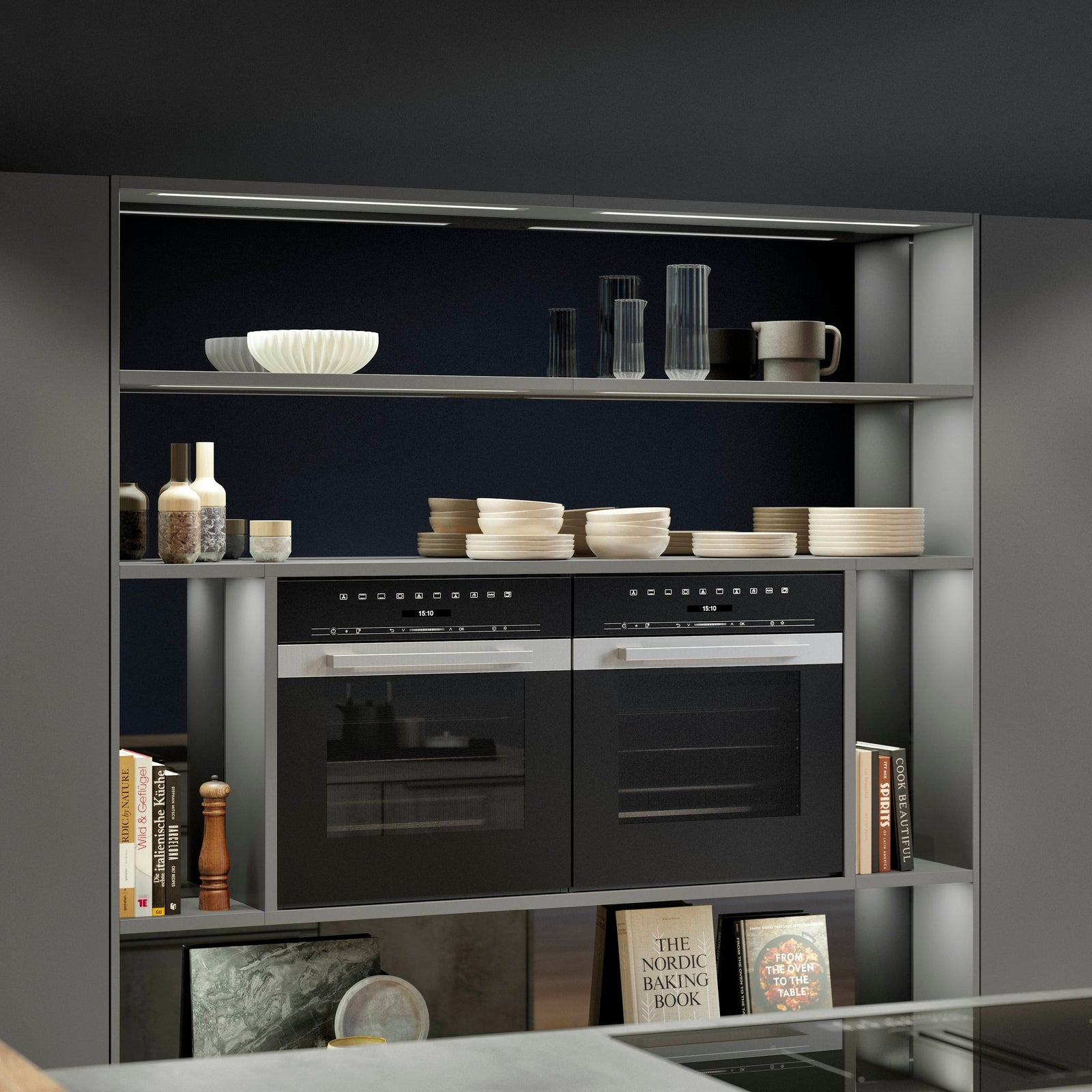

Gerätetechnische Erweiterungen im Nobilia-Portfolio 2026
Moderne Küchen verlangen einfache Wartung und vielseitige Küchengeräte. Nobilia präsentiert 2026 mit dem BORA GPNext und exklusiven Electrolux-Neuheiten technische Erweiterungen für das mittlere Segment. Diese Innovationen beschleunigen den Filterwechsel und bieten Planern eine zentrale Lösung, ein Highlight unter den Küchentrends 2026.
View full article

Effektive Raumnutzung und Beleuchtungskonzepte in der modernen Küche
Viele Küchen leiden unter ungenutztem Stauraum und fehlender Beleuchtung in der Küche. Praxisorientierte Konzepte ermöglichen optimale Raumnutzung und funktionale, stimmungsvolle Küchenbeleuchtung. Tipps reichen von deckenhohen Schränken bis zu smarten Lichtkonzepten für perfektes Licht und maximale Funktion.
View full article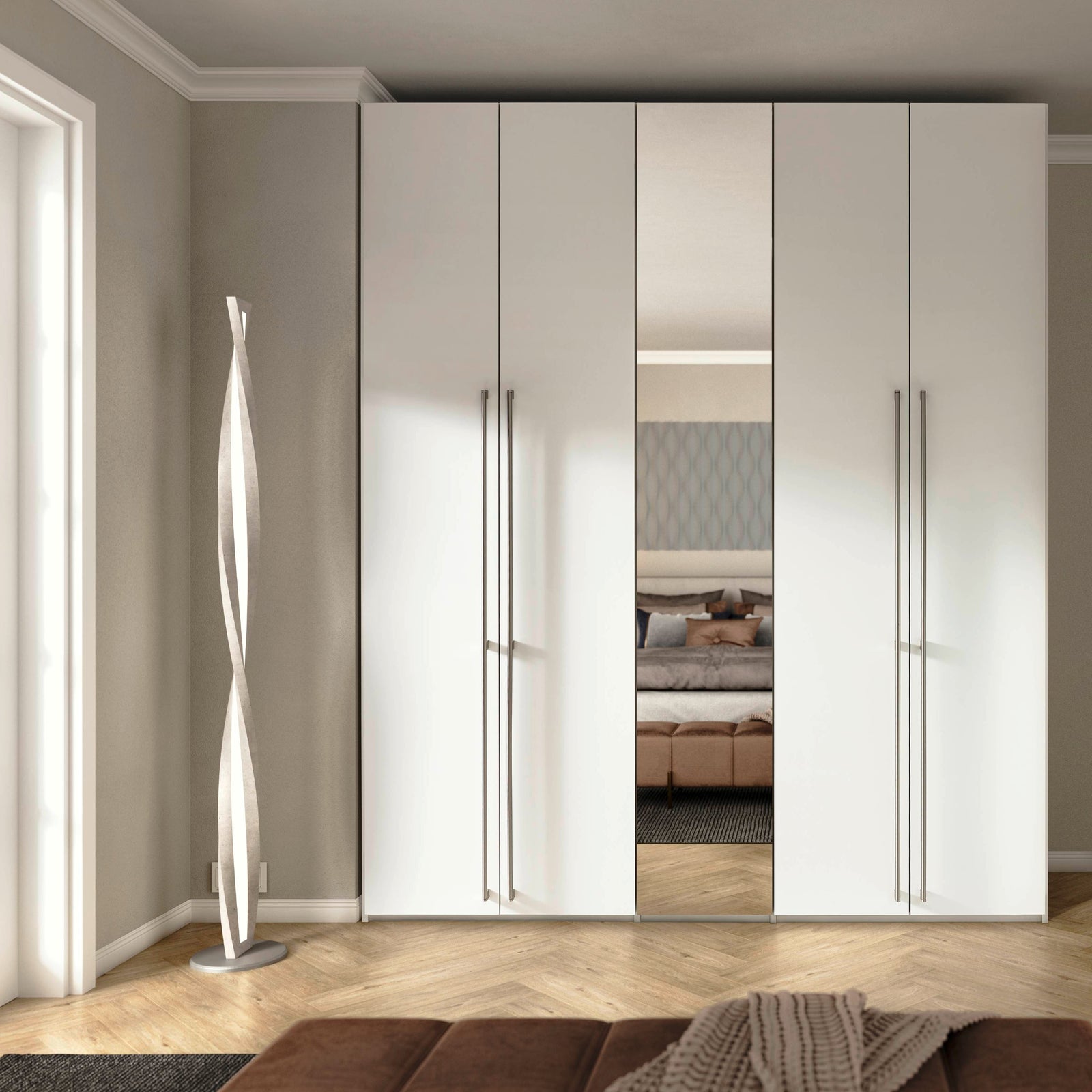

Schlafzimmerplanung mit nobilia
Viele Haushalte zwischen vierzig und sechzig stehen vor der Herausforderung, ihr Schlafzimmer funktional und stilvoll neu zu planen. nobilia erweitert seine Küchenkompetenz um ein systembasiertes Möbelprogramm mit flexiblen Kleiderschrankelementen und abgestimmten Dekoren. Modulare Schlafzimmerplanung sorgt für Langfristigkeit, Stauraumoptimierung und ein durchgängiges Möbelkonzept.
View full article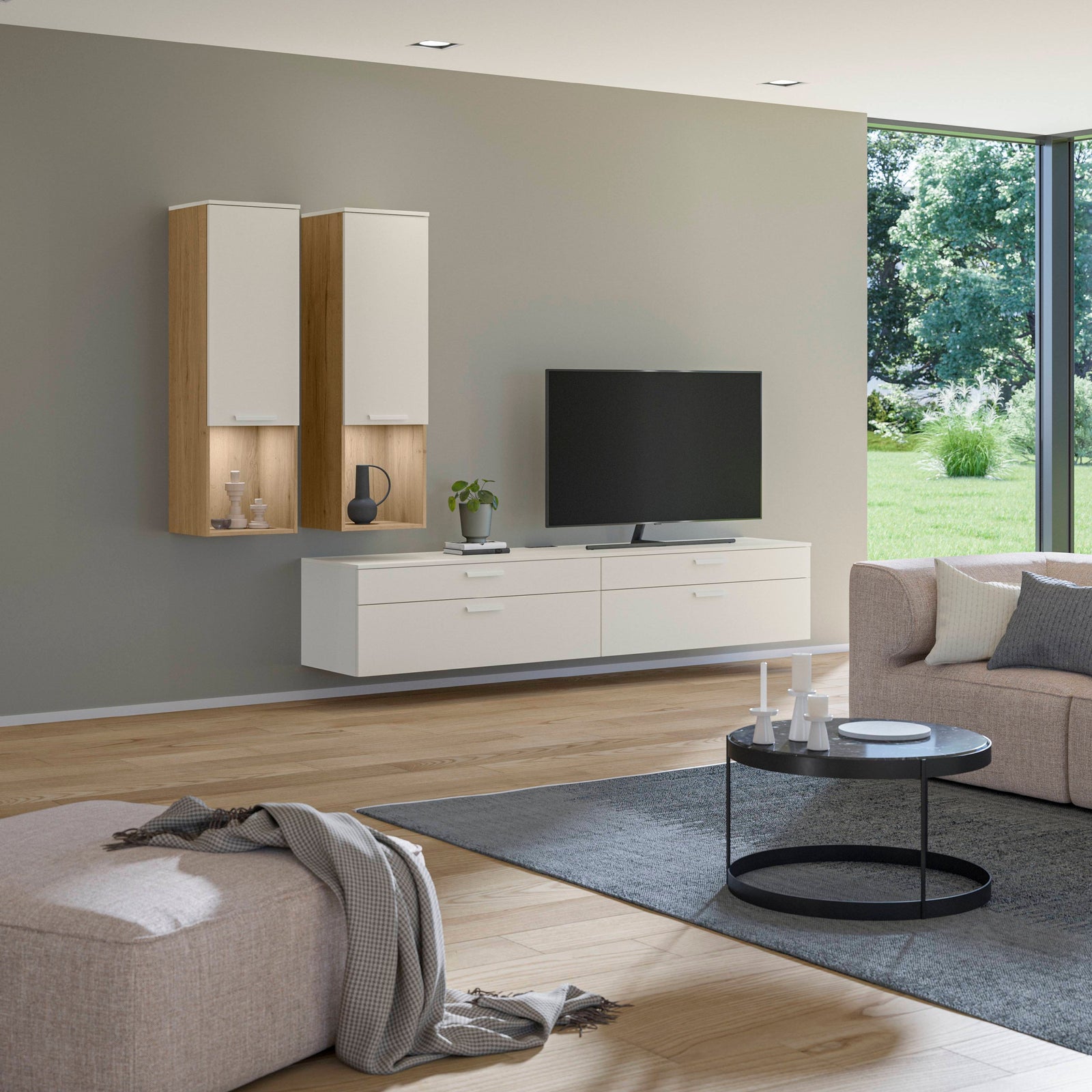

Wohnräume langfristig planen mit den nobilia Produktlinien
Langfristige Wohnraumplanung stellt viele vor unerwartete Hürden. Mit den nobilia Produktlinien profitieren Sie von durchdachten Modulkonzepten für Küchen und offene Wohnbereiche. So schaffen Sie funktionale Räume mit klarer Gestaltung und zeitloser Technikintegration.
View full article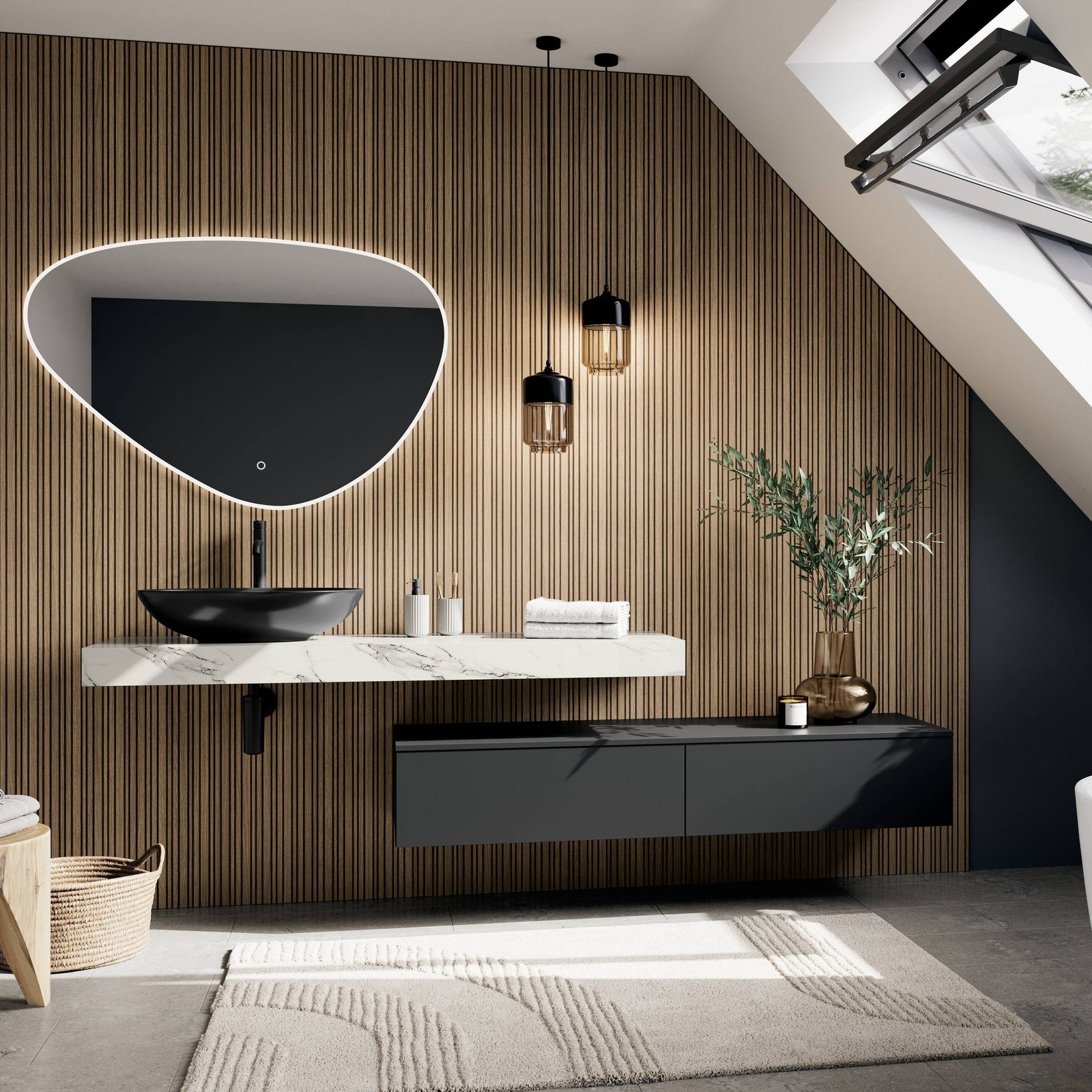

Badplanung mit Blick auf Alltag, Werterhalt und langfristige Nutzung
Viele Eigentümer suchen nach einer funktionalen Badplanung, die Werterhalt und Alltagstauglichkeit vereint. Ich bin Fachmann für nobilia Badmöbel und liefere planungssichere Konzepte, robuste Fronten und Tipps für den Online-Kauf von Badmöbeln. So entsteht ein pflegeleichtes, werterhaltendes Badezimmer für den Alltag.
View full article Sachliche Küchenplanung für erfahrene Käufer
Erfahrene Käufer wissen: Sachliche Küchenplanung spart langfristig Zeit und Kosten. Faire Angebotsküchen und gebrauchte Ausstellungsküchen im Küchenstudio bieten hohes Potenzial, wenn Sie drei zentrale Planungsprinzipien beachten. So erreichen Sie robuste Materialien, ausreichenden Stauraum und ein klares Raumkonzept.
View full article Gerätetechnische Erweiterungen im Nobilia-Portfolio 2026
Moderne Küchen verlangen einfache Wartung und vielseitige Küchengeräte. Nobilia präsentiert 2026 mit dem BORA GPNext und exklusiven Electrolux-Neuheiten technische Erweiterungen für das mittlere Segment. Diese Innovationen beschleunigen den Filterwechsel und bieten Planern eine zentrale Lösung, ein Highlight unter den Küchentrends 2026.
View full article Effektive Raumnutzung und Beleuchtungskonzepte in der modernen Küche
Viele Küchen leiden unter ungenutztem Stauraum und fehlender Beleuchtung in der Küche. Praxisorientierte Konzepte ermöglichen optimale Raumnutzung und funktionale, stimmungsvolle Küchenbeleuchtung. Tipps reichen von deckenhohen Schränken bis zu smarten Lichtkonzepten für perfektes Licht und maximale Funktion.
View full article